
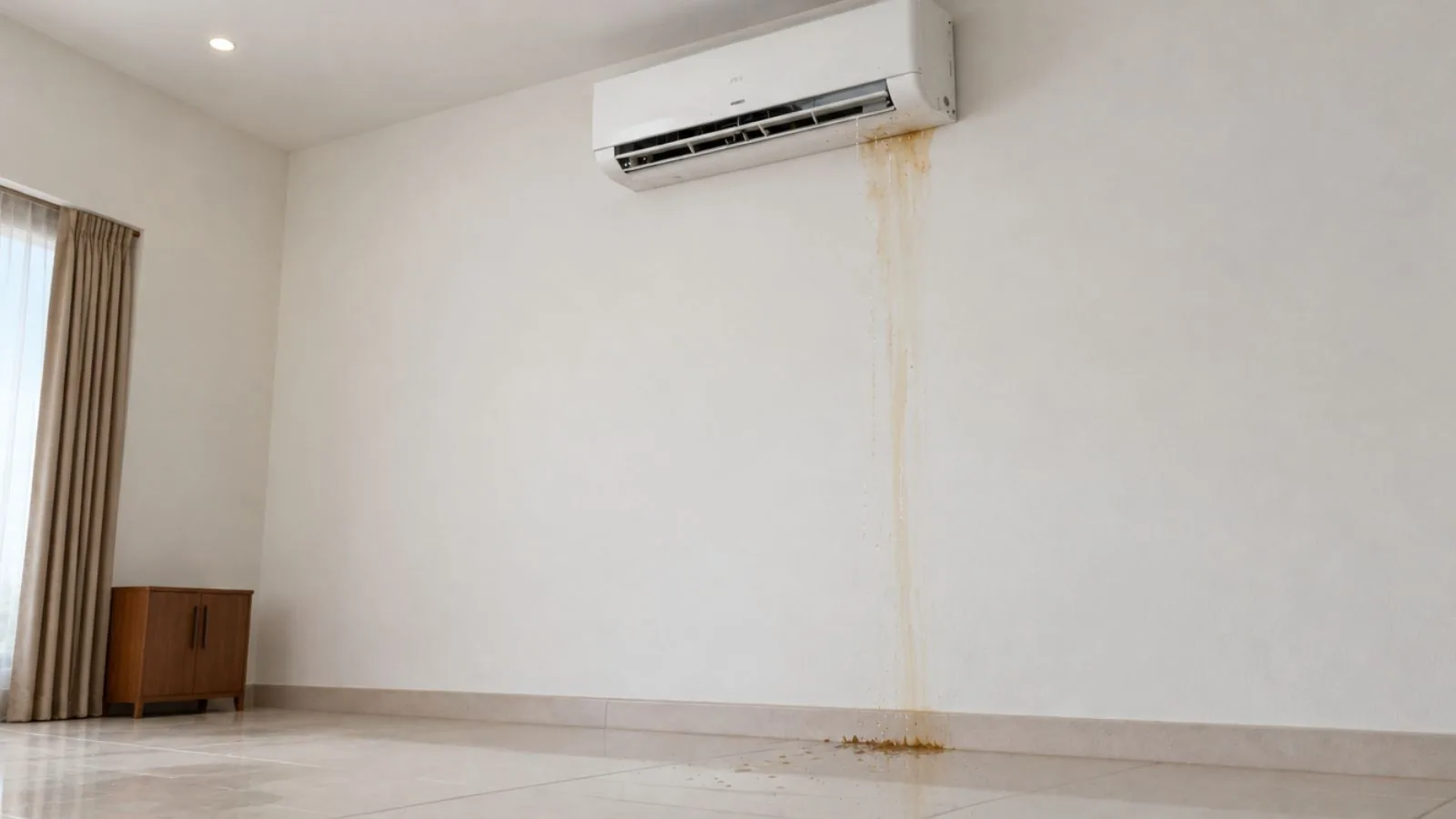
How an air conditioner floods a house
Cooling a house in a humid New Jersey summer pulls gallons of water out of the air. That water drips off the evaporator coil into a pan and runs out through a drain line. When algae, dust or debris clogs the line, the pan overflows into the ceiling, the attic floor or the closet around the air handler.
A frozen coil causes a similar mess. Low airflow or low refrigerant lets ice build up, and when the system cycles off the ice melts faster than the pan can drain. The drip often begins at a seam in the ceiling or beside a vent.
| Cause | Where it leaks | Who fixes the cause |
|---|---|---|
| Clogged condensate drain | Under the air handler, ceiling below | HVAC technician |
| Cracked or rusted drain pan | Attic floor, closet, ceiling below | HVAC technician |
| Frozen evaporator coil | Around the air handler and vents | HVAC technician |
| Poorly insulated duct | Condensation on ducts and ceilings | HVAC or insulation contractor |
What we do after an AC leak
Stop the cooling cycle
Turning the system off stops new water while you wait for the technician.
Find the wet path
Moisture readings and a thermal camera show where water traveled across the ceiling and walls.
Open and dry
Soaked insulation and drywall are removed. Air movers and dehumidifiers dry the cavity.
Check for mold risk
Warm, damp and dark is the combination mold likes. We check air handlers' surroundings and tell you if testing makes sense.
Why slow AC leaks are easy to miss
A slow drip in an attic or closet can run for weeks. The first sign is often a stain on a ceiling that looks like a roof leak, a musty smell near vents or a pan that is full when you check the filter. Because the water is clean at first, many people delay, but standing damp insulation can grow mold within days.
Take a look at the drain line outlet outside the house. If it is dry during a hot day with the system running, the line is probably clogged. A technician can flush it and add a float switch that shuts the system off before the pan overflows.
Check these before you call
Switch the AC off at the thermostat and the breaker for the air handler. Do not stand on a wet attic floor or open a wet ceiling yourself. Water near a light fixture or an electrical box means the circuit should be off until a professional checks it.
What a technician checks after a leak
An HVAC technician will inspect the drain pan, flush the condensate line, test the float switch and check airflow across the coil. They may also look at the air filter and the blower, since poor airflow is a common reason a coil freezes.
Ask them to note the findings in writing. If the leak damaged a ceiling or attic floor, that report helps explain the cause to an insurer. We work with the technician's schedule so equipment placement does not block access to the air handler.
Attic installations carry the most risk, because a leak can run for weeks without being seen. If your air handler is in the attic, ask the technician to install a secondary drain pan with its own float switch. For a closet unit, a water sensor on the floor gives a quick alert. Both cost little compared with a ceiling replacement.
What affects AC leak cleanup cost
- Duration of the leak. Weeks of dripping soak further than one overflow.
- Attic or ceiling type. Blown-in insulation, plaster and drywall each need different handling.
- Area affected. A closet is smaller work than a hallway ceiling.
- Mold signs. Visible growth changes the scope to mold remediation.
The standard behind our drying goals
A clogged condensate line usually leaks clean water, which the ANSI/IICRC S500 water damage standard treats as the least severe category. That standard still expects wet materials to be measured and dried to a stated goal. If the pan has sat for days, the category can change, so the plan changes with it.
Preventing a repeat
Have a technician flush the condensate line each spring and install a float switch. Change the filter on schedule so the coil does not freeze. If the stain on your ceiling is the first sign, read ceiling water damage repair to understand the opening and drying process.
We also help with structural drying after a longer AC leak, and we serve Woodbridge homes in the same way.
Air conditioner leak questions
Yes. Damp insulation and drywall near an air handler can support mold when left wet. Drying the area quickly is the best prevention, and we recommend testing only if growth is visible or a musty odor remains.
No. We dry the water damage. An HVAC technician repairs the drain, coil or pan. Having both done close together keeps the leak from returning.
A clogged condensate line or a cracked pan can overflow into the ceiling below. The stain often looks like a roof leak but appears in warm weather when the system runs.
Coverage varies. Sudden overflow may be treated differently from a long-term leak, so read your policy. Moisture logs and photographs help any claim.