
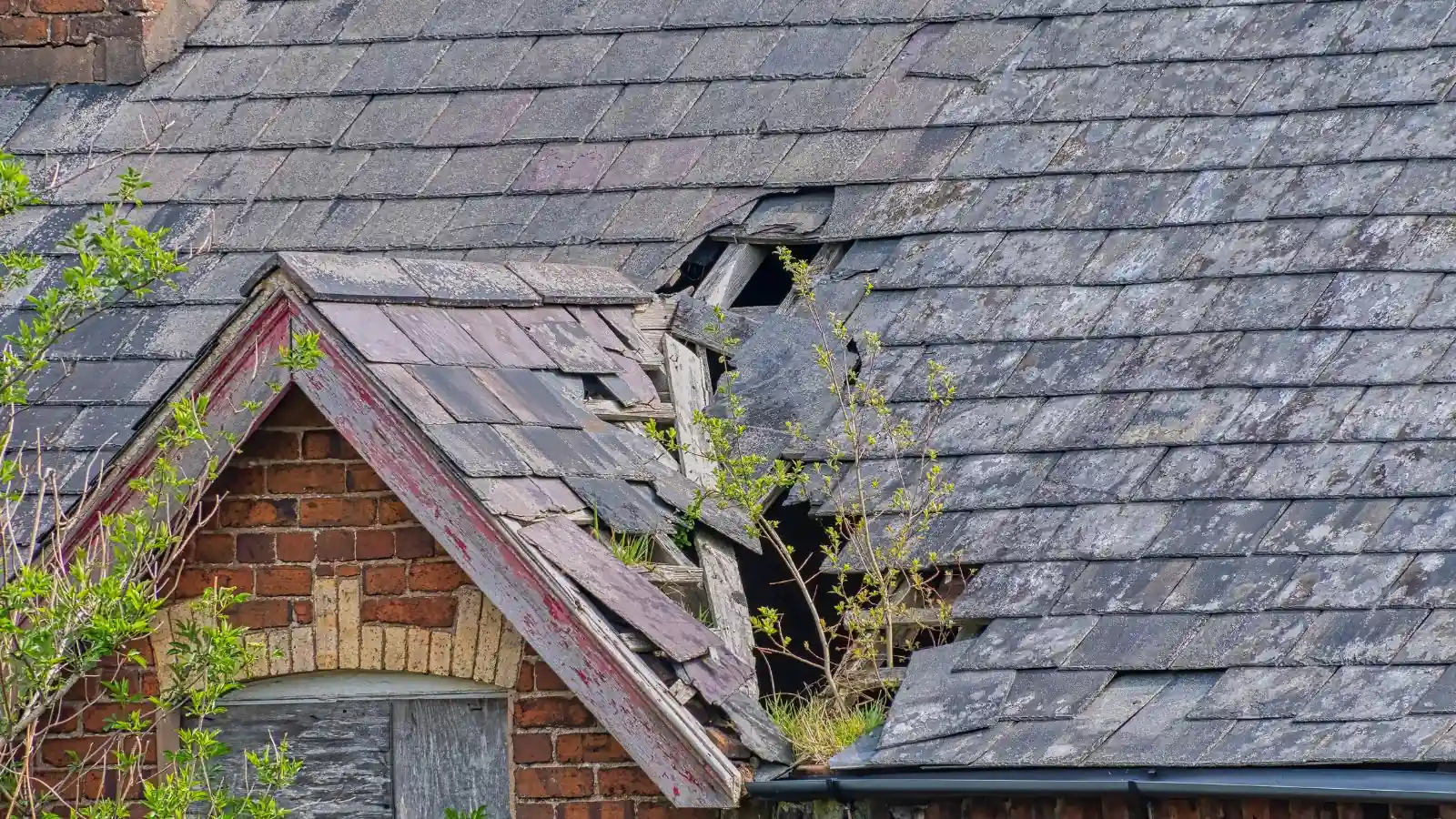
Why storm water damage is an emergency after the rain stops
Rain that enters through a roof or window keeps working after the storm. Insulation soaks and sags, ceiling drywall holds water, and trapped moisture warms and starts to spread. Waiting for a dry day to start cleanup gives mold and rot time to begin.
If you can reach the roof area safely from inside, place buckets and move belongings. Do not climb onto a wet roof. A temporary cover from a roofer is the right fix for the entry point, while we handle the water inside.
| Entry point | What it soaks | First step |
|---|---|---|
| Roof or flashing | Attic insulation, ceiling drywall | Roofer tarp, drain ceiling bulge |
| Window or door seal | Wall base, sill, flooring | Seal temporarily, extract |
| Foundation wall | Basement floor and lower walls | Pump and dry, check drainage |
| Chimney or vent | Ceiling around the penetration | Cover opening, dry cavity |
Our storm damage process
Make safe and contain
We check for sagging ceilings and wet electrical areas and contain water where we can.
Remove standing water
Our water extraction equipment pulls water from floors and carpet.
Open wet cavities
Wet insulation and drywall are removed so the framing can dry.
Dry and document
Air movers and dehumidifiers dry the structure, and we log readings for your claim.
Rahway has seen storms of this kind before
The city's flood hazard guidance lists the April 2007 nor'easter and Sandy among events that put water into Rahway homes, and Ida in 2021 added another. If a storm is forecast, clear gutters and downspouts, check sump pump power and move valuables off basement floors. After the storm, call your insurer early, since some policies set notice windows.
After a storm
Stay away from downed lines and anything touching them. Do not enter rooms with standing water near outlets. Check ceilings for bulges before walking under them. Report gas smells to the utility from outside the building.
How to protect a home before and during a storm
Clear gutters and downspouts so water flows away from the foundation. Make sure the ground slopes away from the walls. Check window and door seals, especially on the side that faces prevailing wind. Keep a tarp and rope where you can reach them.
During a storm, move furniture away from windows that leak and lift rugs. Place buckets under drips and towels along sills. Photograph the damage with the date visible. If the roof is leaking, call a roofer for a temporary cover as soon as it is safe.
What your insurer may ask for
Insurers commonly ask when the damage was discovered, what steps you took to limit it and how the water entered. Keep receipts for emergency repairs such as tarps. Do not discard damaged items until the adjuster has seen them or you have clear photographs.
We keep daily moisture readings and note what was removed and why. Those records show the drying progress and can answer questions about whether materials could have been saved. Coverage decisions come from your insurer, not from us.
Wind-driven rain also finds attics. Insulation that gets soaked loses its value and holds water against the ceiling below. If you hear dripping in the attic or see daylight at a seam, tell the roofer and tell us, so the wet insulation is removed before the ceiling takes the load. Fast action here prevents a much larger repair later.
Garages, porches and enclosed breezeways are often missed. They are built with fewer moisture barriers, and water that enters there can run under a door sill into the main house. Check those transitions after any heavy storm, and note any new stains.
What affects storm damage cleanup cost
- Entry point. A roof leak affects insulation and ceiling, while a window leak affects the wall base.
- How long water sat. Same-day extraction reduces material loss.
- Floors and rooms reached. Wind-driven rain can wet several rooms at once.
- Insulation and finishes. Blown-in insulation and plaster add removal and replacement work.
What the S500 standard says about storm water
Storm water that entered from outside is generally treated as contaminated under the ANSI/IICRC S500 water damage standard. We use that standard as our reference for what is removed and how affected areas are cleaned. It is not a certification claim.
Related repairs and recovery
If rain came through the ceiling, read ceiling water damage repair. If your basement took on groundwater, see basement water damage cleanup. A roofer or window contractor repairs the entry point, and we coordinate drying around their work.
Our crews also serve Clark and nearby towns after the same weather systems.
Storm damage questions in Rahway
Yes. Storms often arrive after hours, and the line at (732) 352-9660 is answered day and night. We dispatch crews as conditions allow, and we start with the safest, wettest areas.
You can start with buckets and moving belongings, but delay lets insulation and drywall soak. Calling early limits the damage. A roofer can handle the entry point while we dry the inside.
Many policies cover wind-driven rain entering through a storm-damaged opening, but terms vary. Read your policy or call your agent. We supply readings and photos to support a claim.
It can start within days in damp materials. Drying fast is the best defense. If growth is visible, ask about mold remediation.