
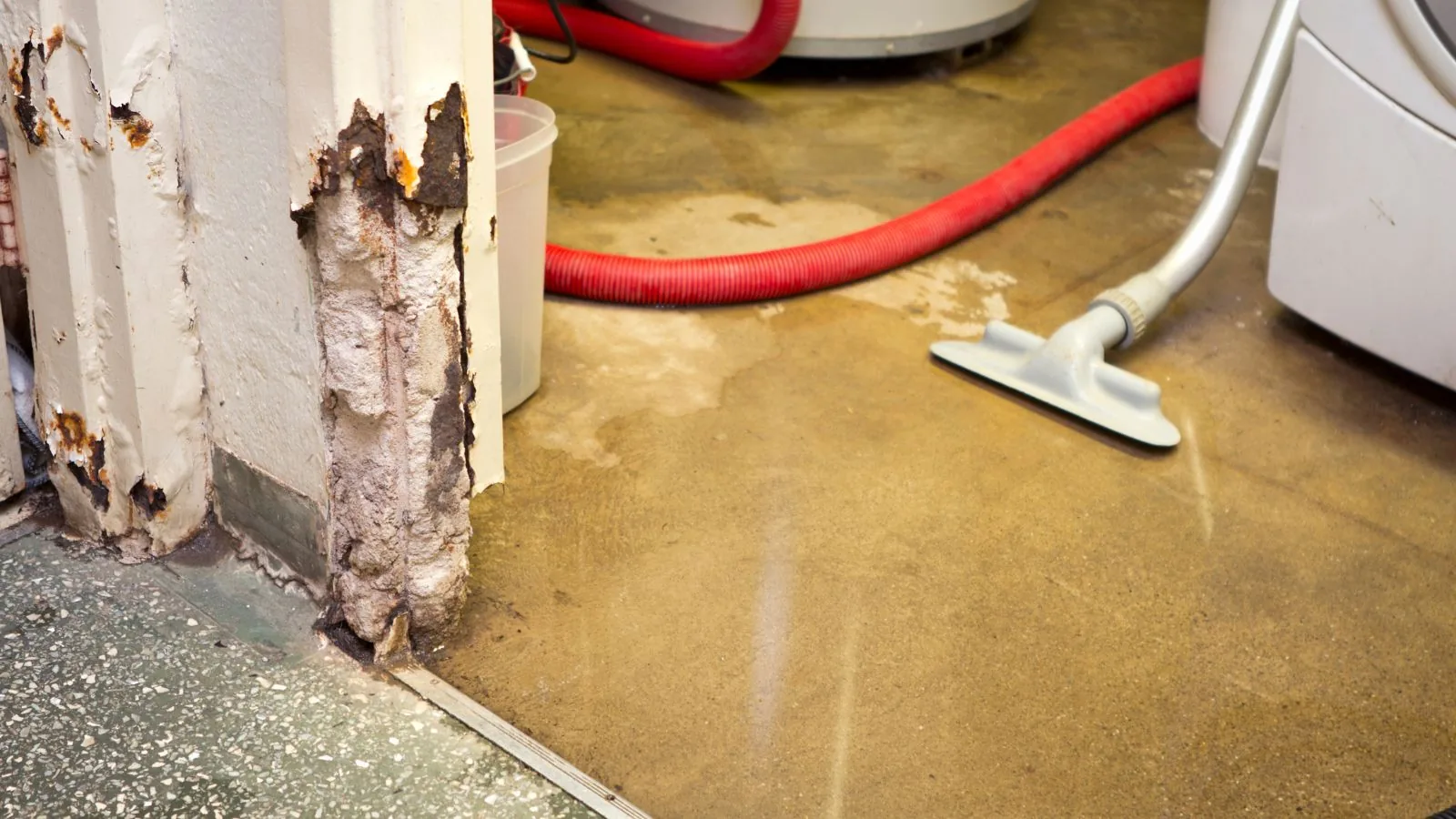
Why standing water is a Rahway emergency within hours
Water does not stay where it lands. A gallon on a hardwood floor moves into the seams, and an inch across a basement slab climbs the bottom edge of drywall by wicking. Within a day the wet area is often several times larger than the puddle you first saw.
Extraction is the first job because every other step depends on it. Drying equipment cannot do its work while free water still covers the floor, so the crew removes the bulk water first and measures what is left. Quick removal also keeps a Category 1 clean leak from turning into a Category 2 problem.
How we pull water out of a home or business
Find and stop the source
We check for a running fixture, a failed supply line or a drain that is backing up. Removing water while the source still runs only buys a few minutes.
Check the water and the room
We note where the water came from, how deep it is and what it touches. That tells us the water category and which materials can be saved.
Extract the free water
Submersible pumps handle depth. Truck-mounted or portable wand extractors lift water from carpet, pad and hard floors.
Map what is left
Moisture meters and a thermal camera show wet drywall, subfloor and framing that the eye misses. Those readings set the drying plan.
Extraction methods compared
| Method | Best for | Limit to know |
|---|---|---|
| Submersible pump | Basements and rooms with several inches of water | Leaves a thin film, so a second pass is needed |
| Truck-mounted extractor | Large carpeted areas and wet padding | Needs hose access from the street or driveway |
| Portable wand unit | Upstairs rooms, stairs and tight closets | Slower on big areas but gentle on finished floors |
| Squeegee and wet vacuum | Hard tile and sealed floors with a shallow spill | Not enough once water has entered seams or subfloor |
Water category decides what we can keep
The ANSI/IICRC S500 standard sorts water into three categories. Category 1 comes from a clean supply such as a broken line. Category 2 is gray water from a washer or dishwasher. Category 3 is grossly contaminated, such as sewage or river flood water.
Carpet and pad that took a clean-water leak can often be dried in place. The same materials after Category 3 contact are normally removed and discarded. We tell you which category we believe applies before any cutting starts.
Before the crew arrives
Turn off power to a wet room at the breaker only if you can reach the panel without stepping in water. Never touch a wet outlet or plug in a wet vacuum. If water is rising near the panel, stay out and call the electric utility as well as us.
Rahway River history shapes how we plan extraction
The city's Know Your Flood Hazard material points to the Rahway River and Robinson's Branch as the sources of past flooding, naming Floyd, Irene in 2011 and Sandy among the events. Basements near those channels can take water from the ground as well as from a pipe. When that happens we treat the water as possible Category 3 and plan disposal and cleanup to match, not just pumping.
What affects the cost of water extraction
- Depth and area. Several inches across a full basement needs more pump time than a wet kitchen corner.
- Water category. Gray or contaminated water adds disposal, protective gear and removal of porous materials.
- Access. Stairs, tight doors and distance from the truck change the setup time and hose runs.
- What is wet. Carpet and pad, hardwood and finished walls each need a different follow-up after the water is out.
What to do before the pumps arrive
These steps keep people safe and keep the water from spreading.
- Do not walk through standing water if outlets or cords are submerged.
- Shut off the water source if you can do so safely.
- Move valuables and electronics to dry ground.
- Do not use a household vacuum on standing water.
- Photograph the water level and the damage.
What comes after the water is out
Pumping alone does not make a room dry. Once the free water is gone, moisture stays in the subfloor, wall cavities and framing. We move straight into structural drying and dehumidification so those hidden layers reach their drying goals.
If the flooding came from outside, our flood damage restoration page explains the cleanup that follows. For a failed supply line or fixture, see burst pipe water damage. Crews also serve nearby addresses in Clark with the same equipment and process.
Water extraction questions from Rahway callers
Yes. The line at (732) 352-9660 is answered day and night, including weekends and holidays. Tell us what is wet and where the water came from, and we arrange a crew. Crews are arranged once you call and describe the water.
Only after the source is stopped. If a line is still running, pumping gains little. Shut the nearest valve or the main, then call us. We can start extraction while the plumber works on the repair.
Often yes for clean-water leaks that are caught early, because carpet can be extracted and dried in place. Contaminated water changes that. We check the category and the backing before telling you what can stay.
For a small spill on sealed flooring, it can be. For deep water or water that has soaked carpet, pad or seams, the home needs stronger extraction and follow-up drying to prevent hidden damage.