
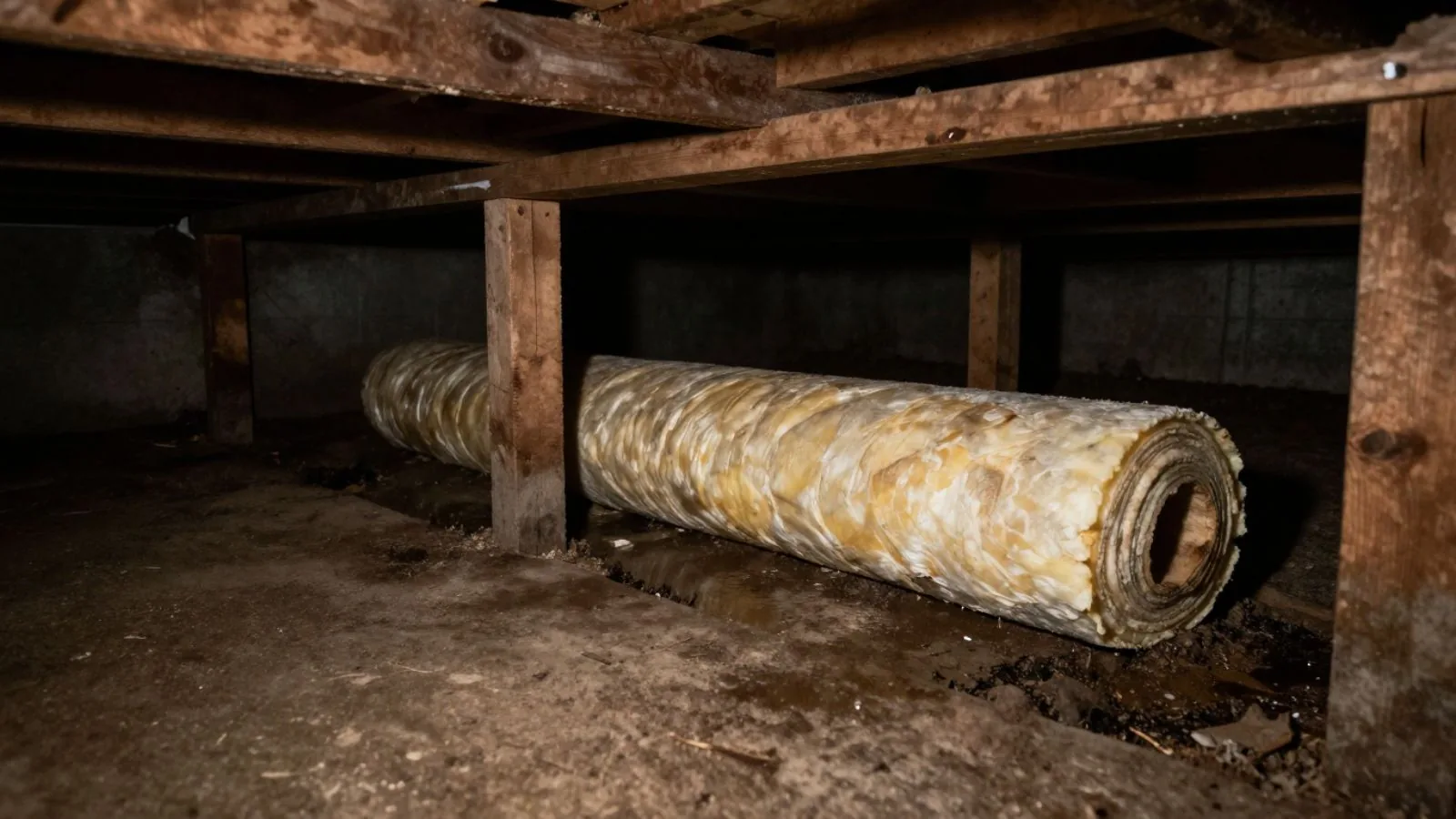
Why a wet crawl space affects the whole house
Air rises through a house, and a damp crawl space sends humid air up through floor gaps, plumbing penetrations and ducts. Floor joists absorb that moisture. Insulation sags, wood floors cup and a musty odor settles into rooms that never got wet.
Crawl spaces fill through foundation seepage, plumbing leaks, poor grading and storm runoff. In winter they can also freeze and split exposed pipes. Finding the source is part of the fix.
| Source | Clues | Who fixes it |
|---|---|---|
| Plumbing leak | Drip, wet insulation under a bath or kitchen | Plumber |
| Groundwater seepage | Water after rain, wet foundation walls | Drainage or foundation contractor |
| Surface runoff | Water entering at vents or grade | Grading or gutter work |
| High humidity | Condensation, fuzzy growth on wood | Moisture control contractor |
Our crawl space process
Check access and safety
We look at head clearance, electrical hazards and ventilation before crawling in.
Remove standing water
Small submersible pumps and wet vacuums remove water from the low spots.
Remove wet insulation
Soaked fiberglass insulation sags and holds water against joists, so it comes out.
Dry joists and subfloor
Air movers and dehumidifiers run, and we read the wood until it matches dry references.
What a dry crawl space looks like
A healthy crawl space has dry soil or a sealed vapor barrier, joists reading in the normal range for wood and no standing water after rain. Relative humidity should stay stable. A hygrometer placed in the space shows whether humidity creeps up in summer.
If the crawl space has open vents, summer air can bring in humidity that condenses on cool surfaces. Some contractors prefer sealed and conditioned crawl spaces. Ask for the reason behind any recommendation and the standard it follows.
Pipes in unheated crawl spaces and freeze-thaw winters
Rahway winters cycle between freezing and thawing, which is hard on pipes that run through unheated spaces. If a plumber's repair involved a crawl-space run, ask whether foam sleeves or heat tape would help. Our frozen pipe water damage page explains what happens when a split line thaws, and why checking these spaces before a cold snap is cheap insurance.
Crawl space safety
Do not enter a crawl space with standing water near wiring. Wear a respirator if you see dark growth or smell mustiness. Watch for sharp debris and snakes or pests that may shelter there. If in doubt, leave entry to trained crews.
Signs of trouble you can check from above
You do not need to crawl in to spot a problem. Look for floors that feel cool or soft near exterior walls, doors that stick in humid weather, a musty odor in the lowest rooms and gaps around floor registers that show a draft of damp air.
From the outside, look at foundation vents, window wells and the grade around the house. Water pooling near the foundation, gutters that overflow or downspouts that end at the wall are often the cause of a wet crawl space.
When to call a plumber, a contractor or us
A plumber handles leaking pipes. A drainage or foundation contractor handles seepage and grading. We handle water removal, drying and the cleanup of wet insulation. Many jobs need two or three of these trades, and the order matters: stop the water, remove it, dry the wood and then rebuild.
Keep a record of what you find. Photograph standing water, wet insulation and any stains on joists, and note the date and the weather. Patterns matter. A space that floods only after heavy rain points to drainage, while a space that stays damp in dry weather points to plumbing or humidity.
What affects crawl space cleanup cost
- Access and height. Low clearance makes every task slower.
- Insulation and vapor barrier. Replacing both adds to the repair.
- Water source. Plumbing leaks are simpler than groundwater problems.
- Mold signs. Visible growth may move the job to mold remediation.
After the space is dry
Ask a contractor about sealing the ground with a vapor barrier, adjusting vents and extending downspouts away from the foundation. If the water reached the rooms above, structural drying can bring the floors back to dry goals.
We also serve Sewaren, where tidal conditions make low crawl spaces more exposed.
Crawl space water questions
Yes. Humid air rises through floor gaps and carries odor into living areas. Drying and sealing the space usually reduces it.
Yes. Soaked insulation holds water against the joists and does not recover. We remove it, dry the wood and let the homeowner or contractor replace it.
A properly sized unit made for crawl spaces can help once the space is dry and sealed. Consult a contractor on the setup so it drains properly.
Coverage depends on the cause. Sudden pipe failure may be covered, while groundwater seepage often is not. Read your policy or ask your agent.