
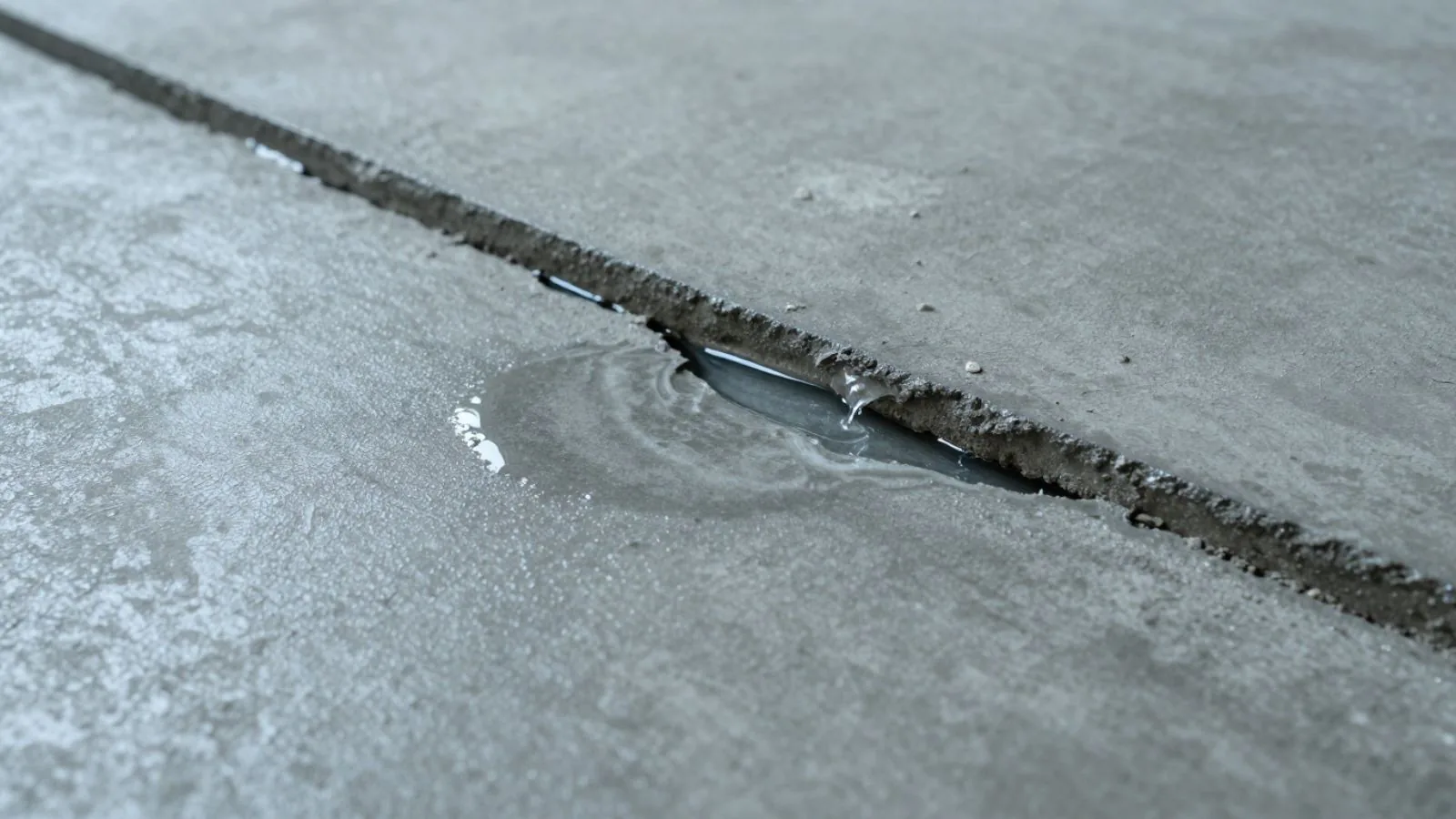
Signs of a slab leak: warm spots, hissing and a rising water bill
Slab leaks give quiet clues. You may notice a warm patch on a floor above a hot-water line, the sound of running water when every fixture is off, a jump in your water bill, damp carpet near an exterior wall or a musty smell that comes and goes.
To test, turn off every fixture and watch the water meter. If the dial moves, water is escaping somewhere. A plumber can narrow the location using acoustic and pressure testing. Call us as soon as you see wet flooring so drying begins while the plumber works.
A slab leak becomes an emergency when floors lift
Water under a slab spreads sideways, softening soil and finding cracks in the concrete. It may rise into flooring through control joints or the edge of the slab. Wood floors cup, laminate lifts at seams and carpet turns damp and smelly.
At that stage, the leak is no longer a plumbing nuisance. It is a structure that is getting wet from below. Shutting off the main reduces new water, and we start drying the visible damage.
| What you notice | What it may mean | First action |
|---|---|---|
| Warm floor spot | Hot-water line leaking under slab | Close the main, call a plumber and us |
| Sound of running water at night | Active leak somewhere in the supply | Check the meter, shut the main |
| Damp carpet at wall edge | Water rising through the slab edge | Call us for readings |
| Cracks with moisture | Pressure from water under the slab | Photograph and call |
How we handle slab leak water damage
Map the moisture
A moisture meter and thermal camera trace the wet area on floors and lower walls.
Remove affected flooring
Wet carpet, pad and floating floors come up so air can reach the slab surface.
Dry the slab and walls
Air movers and dehumidifiers dry the surface and baseboard areas while the plumber works.
Document readings
Logs record the loss for any claim you make under your policy.
Safe steps while you wait
Keep the main closed until the plumber finds the break. Avoid walking on warped flooring over wet areas. If a hot-water line is leaking, scalding water can be present, so keep children and pets away from damp spots.
How a plumber finds a slab leak
Plumbers use acoustic listening equipment, pressure tests that isolate each line and thermal imaging for hot-water leaks. Once they locate the break, the options are spot repair through the slab, rerouting the line through walls or ceiling, or replacing the section.
Rerouting avoids breaking the concrete, but it opens walls. Spot repair is quicker but affects flooring. Ask for the repair plan in writing so we can schedule drying before and after the plumbing work, and so your insurer sees both steps.
If the leak began in a wall pipe instead of under the floor, the damage pattern is different, and our burst pipe water damage page explains it. A slab leak often runs longer before discovery, which is why a spike on the water bill deserves a quick meter check.
What affects slab leak cleanup cost
- Duration. A leak caught early has soaked less flooring than one running for weeks.
- Floor covering. Tile can be left in place if the backer dries, while carpet and wood often come up.
- Rooms reached. The farther water traveled across the slab, the larger the drying area.
- Access to the break. Tunneling or breaking the slab is the plumber's work and is scheduled around drying.
What to do if you suspect a slab leak
These steps help while you wait for a plumber and a crew.
- Shut off the main water valve and see whether the meter still moves.
- Move belongings off warm or wet floors.
- Do not run heat to dry the slab. Warm floors are a sign, not a fix.
- Call a plumber to locate the line and a restoration crew to dry.
- Record the date you first noticed the signs.
Standard and slab leak drying
Our drying methods follow the ANSI/IICRC S500 water damage standard as a reference for moisture goals. Finding and repairing the leaking line is a plumber's work, and the EPA advises drying wet materials within 24 to 48 hours to limit mold growth.
Related work and who handles what
A plumber repairs, reroutes or replaces the leaking line. Our job is to dry what the water touched, using the process on our structural drying and dehumidification page. If carpet is involved, see carpet water damage restoration.
Ask your plumber to check the rest of the system when the repair is done, since one failure can point to the age of other lines. Crews also reach Sewaren and the rest of the nearby area.
If you think you have a slab leak
Yes. Slab leaks can show up at any hour once floors get wet, and the line at (732) 352-9660 is open day and night. Close the main, call us, and we send a crew to start drying.
A warm spot over a concrete floor can mean a hot-water line is leaking beneath. A plumber can confirm with testing. Meanwhile, keep the main off if you cannot reach them right away.
A steady leak adds water to the bill even if you see nothing. Turn off all fixtures and watch the meter. If it moves, there is a leak and a plumber should find it.
No. We dry the damage. A licensed plumber locates and repairs the line, and we coordinate timing so the drying and repair do not interfere.