
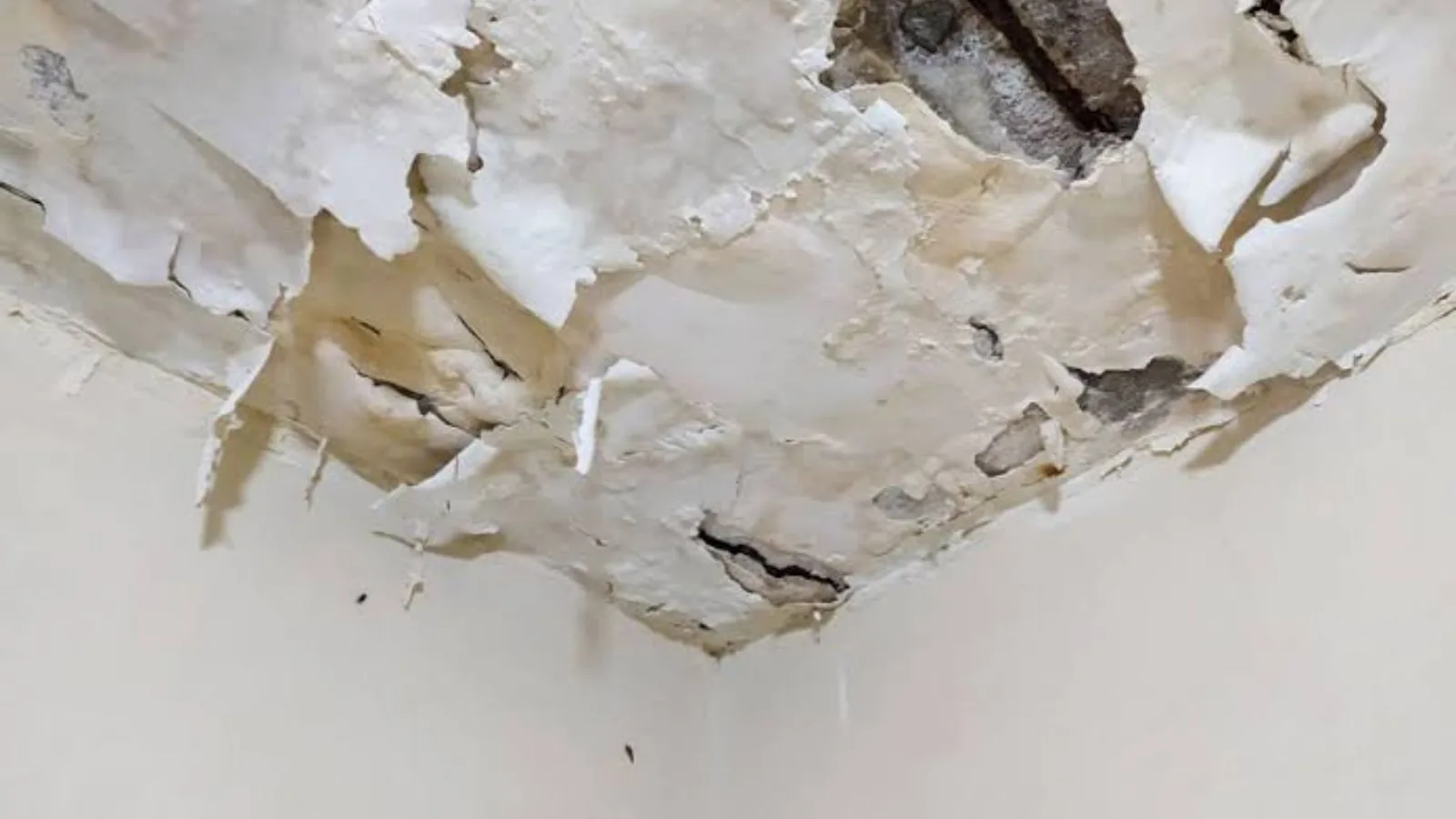
Why drywall damage spreads
Gypsum board is paper wrapped around a mineral core. Both absorb water. The paper wicks moisture upward, often several inches above the visible waterline. When a wall is wet on one side, the cavity behind it is wet too, with insulation and studs holding water.
That is why painting over a stain fails. The paint hides it but does not dry the cavity. A bubble, a soft spot, a stain that returns or a musty odor all point to water inside the wall.
| Wall sign | What it may mean | What we do |
|---|---|---|
| Brown stain | Past or ongoing leak | Read moisture, find the source |
| Bubbling paint | Moisture behind the surface | Open a small test hole, read the cavity |
| Soft drywall | Saturated board | Cut out and dry |
| Musty odor | Damp cavity or early mold | Inspect, dry, consider mold steps |
Our wall repair process
Measure the wall
Moisture meters and a thermal camera show the wet edge, which is often higher than the stain.
Make small openings
Test holes confirm what is behind the board before we cut larger sections.
Remove wet materials
A flood cut removes drywall and insulation above the waterline, as high as readings require.
Dry the studs and plate
Air movers and dehumidifiers dry the framing, and we log readings until it reaches goal.
Plaster versus drywall
Older Rahway homes often have plaster over wood lath. Plaster is harder than drywall and may be dried in place, though the lath behind it can stay wet. A thermal camera helps us decide where to open. Plaster repair is a skilled trade, so ask your contractor about matching the original surface.
Drywall, once saturated, usually cannot be saved. It loses strength and can grow mold on the paper. Cutting it out and replacing it is the dependable fix, as long as the studs and plates are dry first.
Before opening a wall
Turn off power to circuits in the wall if there is any chance of water near wiring. Plaster and paint in older homes can contain lead or asbestos, so do not sand or scrape without testing. Wear a dust mask if you do any light cleanup.
Hidden water inside walls
Some wall leaks show nothing at the surface for weeks. A tub spout that leaks into the wall, a window that seeps rain or a small supply line drip may soak insulation and studs while the paint looks fine. Signs include a slight bulge near the baseboard, a hollow sound when tapped or a faint musty smell.
If you suspect hidden water, a moisture meter and thermal camera read through the wall without cutting. That non-invasive step often saves a lot of demolition by showing exactly where to open.
What a clean repair looks like
A clean repair has a dry stud cavity, new insulation where needed and a straight cut line in the drywall that is easy to tape and finish. Cutting at a stud edge simplifies the patch. We keep cuts as small as readings allow, and we leave the finishing to your contractor.
Bathrooms, exterior walls and shared walls
Bathroom walls get wet from tub surrounds, shower valves and supply lines. Exterior walls get wet from window flashing, siding gaps and roof runoff. Shared walls in two-family homes can pass water from one side to the other. Each source has a different fix, so we note where the wet pattern starts.
If you share a wall with a neighbor, tell them early. A leak that seems minor on your side may be larger next door. Documenting both sides keeps the repair and the claim clear.
What affects wall repair cost
- Height of the wet zone. A foot of wet drywall is a smaller job than four feet.
- Insulation and finishes. Tile, paneling and wallpaper add steps.
- Number of walls. Water often travels through adjoining rooms.
- Mold signs. Visible growth can change the plan to mold remediation.
The standard behind wall drying
We use the ANSI/IICRC S500 standard as the reference for judging wet drywall, insulation and framing. It supports measuring wall cavities against a dry goal before anything is closed up. It is a published standard, not a certification we claim.
After drying
Once framing reads dry, drywall is hung, taped, primed and painted by your contractor. The source of the leak should be fixed first. If the leak began at a pipe, see burst pipe water damage. For the equipment and goals used on the framing, read structural drying and dehumidification.
We also serve Woodbridge and the surrounding area.
Wall water damage questions
Not safely. If the cavity is wet, paint hides the stain but leaves moisture behind. Dry the wall first, then repair and paint.
Often several inches above the visible line, and sometimes much more. Moisture readings show the true edge so we cut only as high as needed.
Fiberglass batts can sag and hold water. We usually remove wet insulation so the cavity can dry, then the contractor replaces it.
Sudden leaks are often treated differently from long-term seepage. Read your policy. We provide readings and photos.