
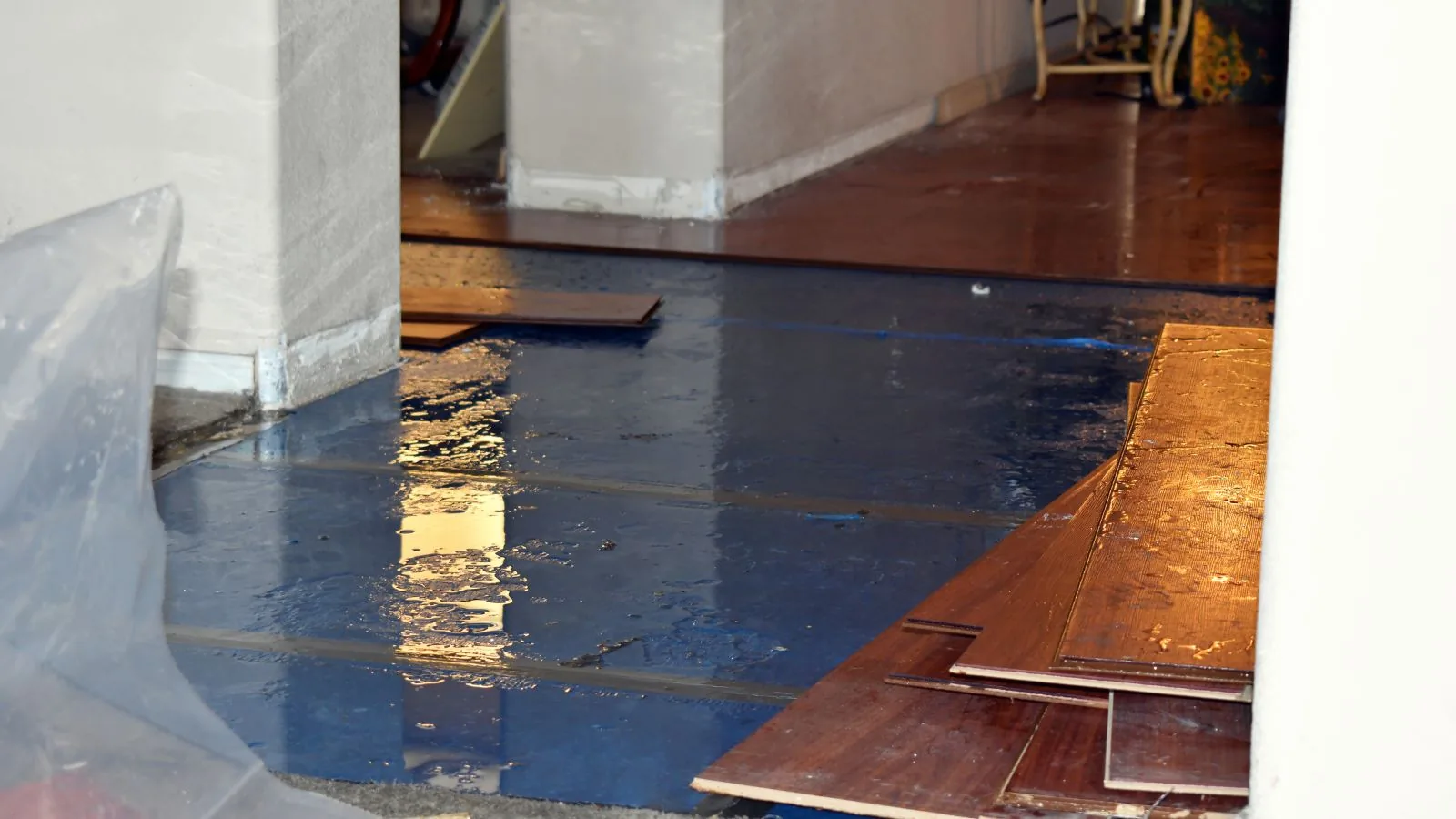
What makes a flood emergency different from a pipe leak
A pipe leak is usually clean water from a known source. Flood water arrives from outside, mixes with soil, oil, sewer overflow and yard chemicals, and falls into Category 3 under the ANSI/IICRC S500 standard. Porous materials that it touches are normally removed.
That changes the job. We wear protective gear, bag and haul contaminated materials, clean surfaces and then dry the structure. Skipping the cleanup step and drying only the wet surface leaves residue behind in the walls and subfloor.
Rahway's flood record is documented
The city's Know Your Flood Hazard guidance describes flooding along the Rahway River and Robinson's Branch and points to Floyd, Irene in 2011 and Sandy. The remnants of Ida in September 2021 brought a FEMA major disaster declaration to the area. If your street is near one of these channels, check your flood zone on the city and FEMA maps before the next storm and keep valuables off the basement floor.
Flood restoration steps
Make the space safe
We confirm power is off in wet areas, check for gas odors and look at the structure before crews enter.
Pump and remove debris
Submersible pumps clear depth. Mud, silt and ruined contents are removed next.
Strip what cannot be saved
Carpet, pad, insulation and low drywall that contacted flood water are cut out and discarded.
Clean and treat
Surfaces get cleaned and treated with an antimicrobial suited to the material.
Dry to goal
Air movers and dehumidifiers run while we log readings until framing and subfloor are dry.
What flood water does to common materials
| Material | Typical outcome | Why |
|---|---|---|
| Carpet and pad | Usually removed | Porous and holds contaminants |
| Drywall and insulation | Cut out above the waterline | Wicks water and cannot be sanitized inside |
| Hardwood floors | Case by case | Depends on time wet and how it was installed |
| Framing and subfloor | Cleaned and dried | Solid wood can be treated and dried |
| Tile and concrete | Cleaned and dried | Non-porous or low porosity |
Safety before cleanup
Do not enter water that may touch electric panels, outlets or appliances. Wear boots and gloves if you must walk through damp areas. Discard food that touched flood water. If you smell gas, leave and call the gas utility.
Flood insurance and your policy
Standard homeowners policies often exclude flood. The New Jersey Department of Banking and Insurance publishes guidance that explains that a separate flood policy is the usual route. Check your coverage before a storm, not after one.
We document moisture readings, photographs and the materials removed so you have a clear record if you file under a flood policy or another coverage. We do not decide coverage. Your insurer does.
Sorting belongings after a flood
Start with what matters most and cannot be replaced: documents, photographs and medications. Move them to a dry room, but do not handle them with open cuts. Photograph everything that was in the water before you move it, since the record helps with a claim.
Non-porous items such as glass, metal and hard plastic can usually be cleaned and disinfected. Upholstered furniture, mattresses and stuffed items that touched flood water are normally discarded. Food and drinks that touched the water should be thrown out, including sealed cans that cannot be washed and sanitized.
What affects flood restoration cost
- Depth and duration. Deeper and longer exposure means more removal and drying.
- Square footage affected. Larger wet areas need more equipment and more days.
- Contamination level. Sewage or heavy silt adds cleaning, disposal and protective work.
- Contents and finishes. Finished basements carry more to remove than bare ones.
Related recovery work
If the flood came with a storm, our storm water damage cleanup page covers roof and window leaks. When sewage mixed with the water, see sewage backup cleanup. For the long drying phase, read about structural drying.
We also serve Woodbridge, where tidal and creek flooding follow a pattern of their own.
Flood restoration questions in Rahway
Yes. Flooding often peaks at night, and the line at (732) 352-9660 is answered day and night. Tell us how deep the water is and whether power is off, and we arrange pumping and recovery.
Yes. Under the S500 standard, flood water from outside is treated as Category 3. Porous materials it touches are normally removed, and surfaces are cleaned and treated before drying.
Many standard policies exclude flood and rely on a separate flood policy. Terms vary, so check yours. We provide moisture logs and photographs to support whatever claim you file.
It depends on the materials and the humidity. Light cases may reach dry goals in a few days, and heavy ones take longer. We measure daily and remove equipment only when readings match dry reference levels.