
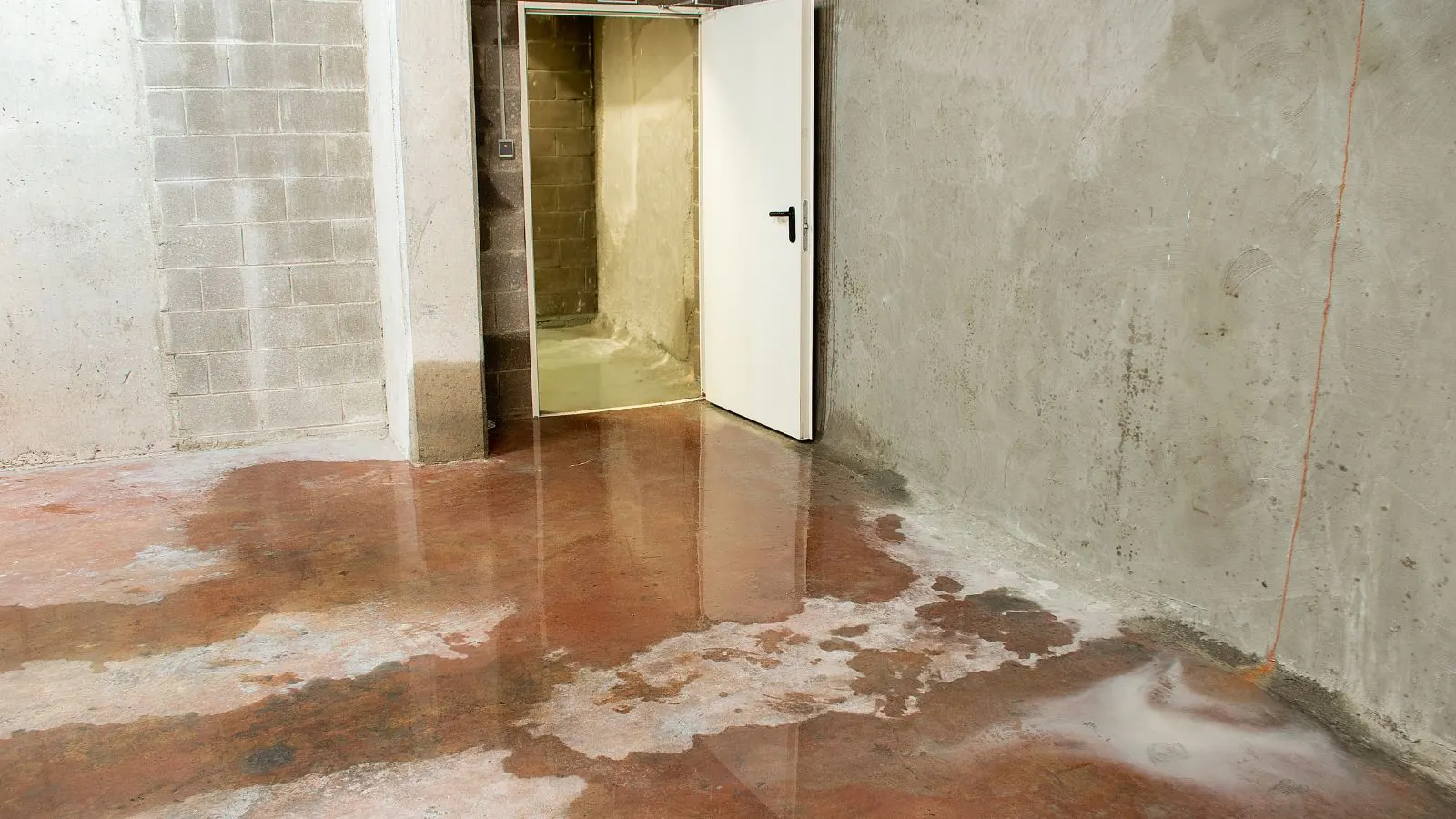
Why a flooded basement is an emergency from the start
Water in a basement sits against walls, stored boxes and the furnace or water heater. It also reaches electrical panels and outlets. Within hours, the lower walls wick moisture upward, and by the next day the whole space smells damp.
If water is deep enough to reach outlets or the panel, do not wade in. Call your electric utility to shut off service if you cannot safely reach the breaker. Then call us for pumping and cleanup.
Where basement water comes from
| Source | Clues | Water category |
|---|---|---|
| Burst or leaking pipe | Clear water, steady flow | Category 1 |
| Sump pump failure | Rising water after rain, silent pump | Category 2 or 3 |
| Groundwater through walls or floor | Seepage after storms, wet at joints | Category 2 or 3 |
| Sewer backup | Floor drain overflow, odor | Category 3 |
Basements near the Rahway River and Robinson's Branch
Rahway's flood hazard guidance names the Rahway River and Robinson's Branch as past sources of flooding. If your basement is close to either, ground saturation after a hard rain can push water through the floor slab and wall joints, even when the surface looks dry. Test the sump pump now, confirm it has a working discharge and consider a battery backup.
What we do in a flooded basement
Pump out the water
We lower the level in stages so walls are not stressed by sudden pressure change.
Remove wet contents and materials
Carpet, pad, insulation and low drywall are removed when contaminated or saturated.
Clean and dry
Surfaces are cleaned, then air movers and dehumidifiers run until readings reach goal.
Check for mold risk
A damp basement is an ideal place for mold, so we monitor humidity until the space stabilizes.
Basement safety
Do not enter a basement with standing water if the panel, outlets or appliances are submerged. Never run a gas generator indoors. Do not carry wet boxes up the stairs if the water is contaminated.
Protecting stored belongings
Lift items off the floor as soon as you can do so safely. Plastic bins protect contents better than cardboard, which wicks water. Move documents, photographs and electronics upstairs first. If water is dirty, wear gloves and boots, and bag soaked items for review.
Take photos of belongings before you move them. Make a list with approximate value and age. If an item is soaked with groundwater, assume contamination. Hard goods can often be cleaned, while soft goods and cardboard are usually discarded.
Preventing the next wet basement
Test the sump pump twice a year by pouring water into the pit. Check the discharge line for clogs and make sure it ends well away from the foundation. A battery backup helps when storms knock out power at the same time the pit fills.
Check grading, gutters and window wells. Seal visible cracks in the walls after the space is dry. A dehumidifier set around 50 percent humidity helps the space stay stable once the structure has dried.
Finished basements need a closer look at the walls. Paneling, framing and insulation can hide water for weeks. We take readings through the wall surface and open small sections when a reading stays high. That approach limits demolition to the areas that need it and gives you an honest picture before rebuilding.
What affects basement cleanup cost
- Depth and duration. Deeper and longer water means more removal and drying.
- Finished or unfinished. Finished basements have drywall, carpet and trim to deal with.
- Contamination. Groundwater or sewage adds disposal and sanitizing.
- Equipment days. Concrete and block walls dry slowly, so drying can take longer.
What the S500 standard says about basements
The ANSI/IICRC S500 standard treats floodwater and groundwater as potentially contaminated, which changes what is removed and how it is cleaned. We use it as our reference for basement jobs. The EPA also advises drying wet materials within 24 to 48 hours to limit mold growth.
Fixing the cause and rebuilding
Once the basement is dry, find out why it flooded. A sump pump, a grading problem and a window well can each be repaired. If the cause was a river or storm, our flood damage restoration page explains the larger cleanup. If dampness lingers, mold remediation may follow.
Our structural drying and dehumidification page covers how we get concrete and framing to dry. We also serve Woodbridge basements near tidal and creek areas.
Flooded basement questions
Yes. Basements often flood during overnight storms, so the line at (732) 352-9660 is answered day and night. Stay out of water near electrical equipment and call us.
Small amounts can be handled with a wet vacuum if power is safe. Deep water is better left to a crew because sudden pumping can stress walls and electrical safety is a concern.
It depends on how much water entered and what the walls are made of. Concrete dries slowly. We measure daily and remove equipment when readings reach dry goals.
Many policies exclude groundwater flooding and sewer backup unless added. Check yours. We provide readings and photographs for whatever claim you file.
No. Restoration removes water, dries the structure and cleans what the water touched. Waterproofing stops water from entering again, and that is a different trade, such as a drainage or foundation contractor. We tell you honestly when the cause needs that kind of fix.