
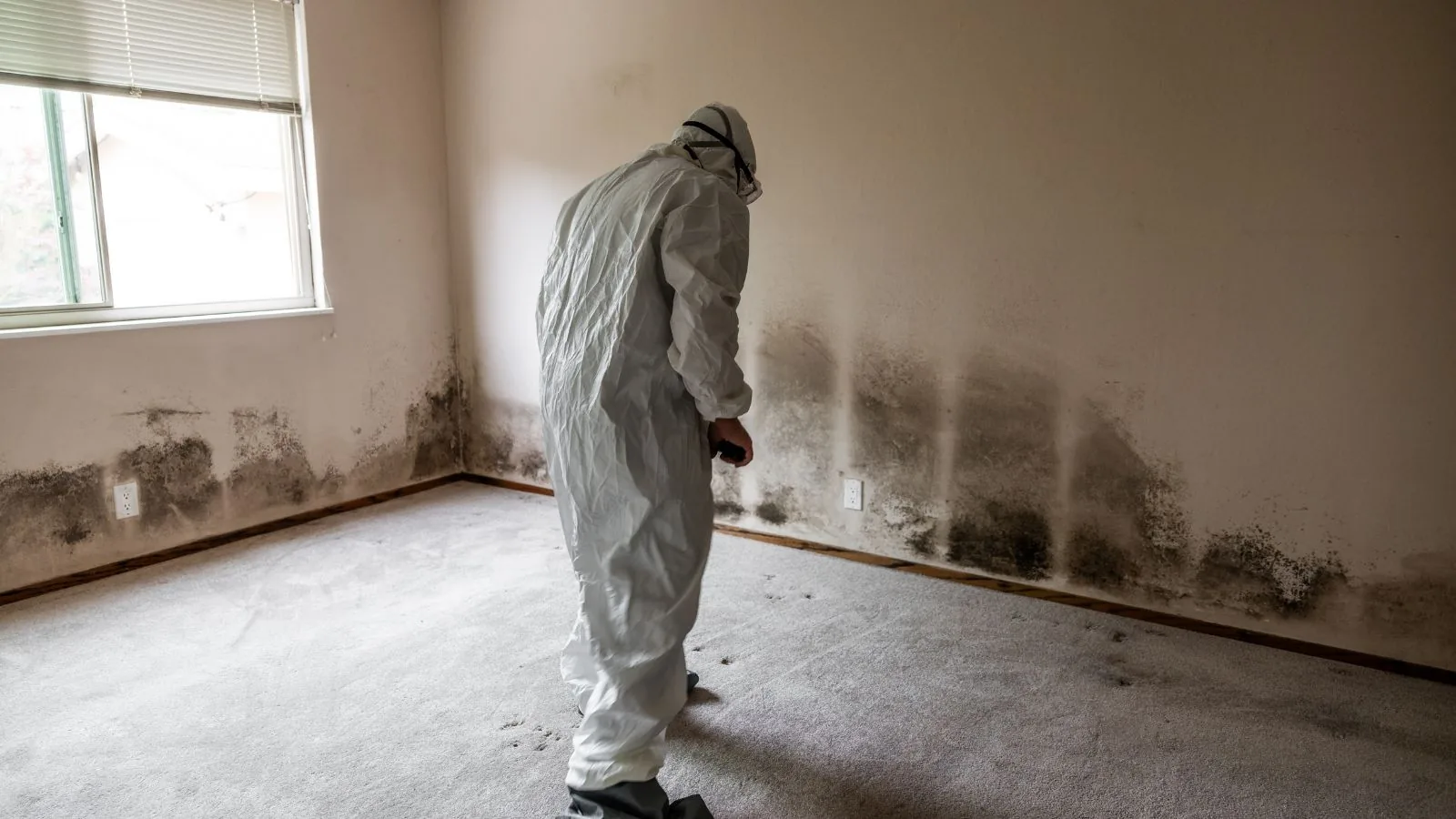
Signs of mold after water damage: spotting, musty odor and recurring stains
Mold often shows as fuzzy or speckled patches in colors from white and green to black. It appears on drywall paper, wood framing, carpet backing and the underside of flooring. A musty smell that returns after cleaning is a common first clue, and it may come before any visible growth.
A stain that keeps coming back after repainting is another sign, because it points to moisture inside the wall or ceiling. If you see growth after a recent leak, the right sequence is to stop the water, dry the materials and then address the growth.
How mold remediation works
The ANSI/IICRC S520 standard guides mold remediation. The plan depends on how much growth there is and where it sits. Small, surface-level patches may need cleaning only. Larger areas need containment so spores do not spread, removal of porous materials and HEPA air filtration.
We do not make health claims about mold, and we avoid scare language. We say what we see, what needs to come out and what steps keep it from returning. Questions about health belong with your doctor.
Find the moisture source
No remediation lasts if the leak or humidity remains. We confirm it is fixed or being fixed.
Contain the area
Plastic barriers and negative air control limit the spread of dust and spores.
Remove and clean
Affected drywall, insulation and carpet are removed. Hard surfaces are cleaned with HEPA vacuums and damp wiping.
Dry and verify
Air movers and dehumidifiers dry the area, and readings confirm the moisture is gone.
| Material | Typical handling | Why |
|---|---|---|
| Drywall with growth | Remove | Paper face supports growth and cannot be fully cleaned |
| Wood framing | Clean and dry | Solid wood can be cleaned and checked |
| Carpet and pad | Remove | Porous and holds moisture |
| Tile and metal | Clean | Non-porous surfaces |
Ask who is qualified and what the rules are
State licensing for mold work varies, so ask whether your state licenses mold work and request proof of any license and of insurance before signing. Many homeowners also hire an independent assessor who does not perform the removal, to write the plan and to confirm results afterward. Having a second party review the work keeps incentives clear.
What not to do
Do not disturb a large patch with a dry brush or a household vacuum. Do not mix bleach with other cleaners. Do not cover growth with paint or sealant. Keep fans from blowing across it, since that spreads dust.
What causes mold after a leak
Mold needs moisture, a food source and time. Drywall paper, wood and carpet backing all provide food. Time is the factor we can control. Materials that dry within a day or two rarely develop growth, while materials left damp for several days can.
That is why the first response to a leak matters more than any product. Dry quickly, fix the source and keep humidity in check. If those steps happen, remediation is often unnecessary.
Independent assessment and verification
An independent assessor can inspect the space, write a scope of work and check results after remediation. The assessor does not do the removal, so the review is separate from the work. This is a common practice in larger or contested cases.
Ask for the scope in writing, ask what clearance looks like and ask what happens if the result is not met. A clear plan prevents surprises. For smaller jobs, a visual check and moisture readings may be all that is needed.
What affects mold remediation cost
- Area and location. A small patch on a ceiling is different from growth in a crawl space.
- Containment needs. Larger areas need barriers and air filtration.
- Materials removed. Drywall, insulation and carpet add disposal and rebuilding.
- Moisture source. Fixing the leak or humidity is part of the scope.
Mold clearance when a home is being sold or financed
Mold often comes up during a sale. A buyer's inspector may find staining, and a lender or an agent may ask that it be dealt with before closing. If that is your situation, tell us when you call. The timeline of a closing changes how the work is planned, and it is better to say so at the start than halfway through.
The usual path has three parts. First the moisture source is found and fixed. Then the affected materials are cleaned or removed under the ANSI/IICRC S520 standard. Finally an independent assessor, someone who does not do the removal, checks the result and writes it up. Keeping the assessor separate from the remediation crew is what makes the check meaningful.
We cannot promise what a lender or buyer will accept, because each sets its own conditions. What we can do is keep a written scope, photographs and a record of what was removed, so you have documents to hand over. Ask the other party what they need in writing before work begins.
Prevention after remediation
Keep indoor humidity under control, vent bathrooms and fix leaks quickly. If a basement or crawl space is the source, read basement water damage cleanup or crawl space water damage. For drying standards, see structural drying and dehumidification.
We serve Clark and nearby areas with the same process.
If you think you have mold
Look for fuzzy or speckled patches, a musty smell and a location near past leaks. A stain alone is not proof. A moisture reading and an inspection give a better answer than looks.
Moisture is probably still in the wall or ceiling. Paint hides the stain but does not dry the cavity. Find and fix the source, then dry the materials.
Testing can help in some cases, such as a hidden problem or a dispute. It is not always needed when growth is visible. An independent assessor can advise.
Coverage varies. Many policies limit mold or require it to follow a covered water loss. Read your policy and ask your agent early.