
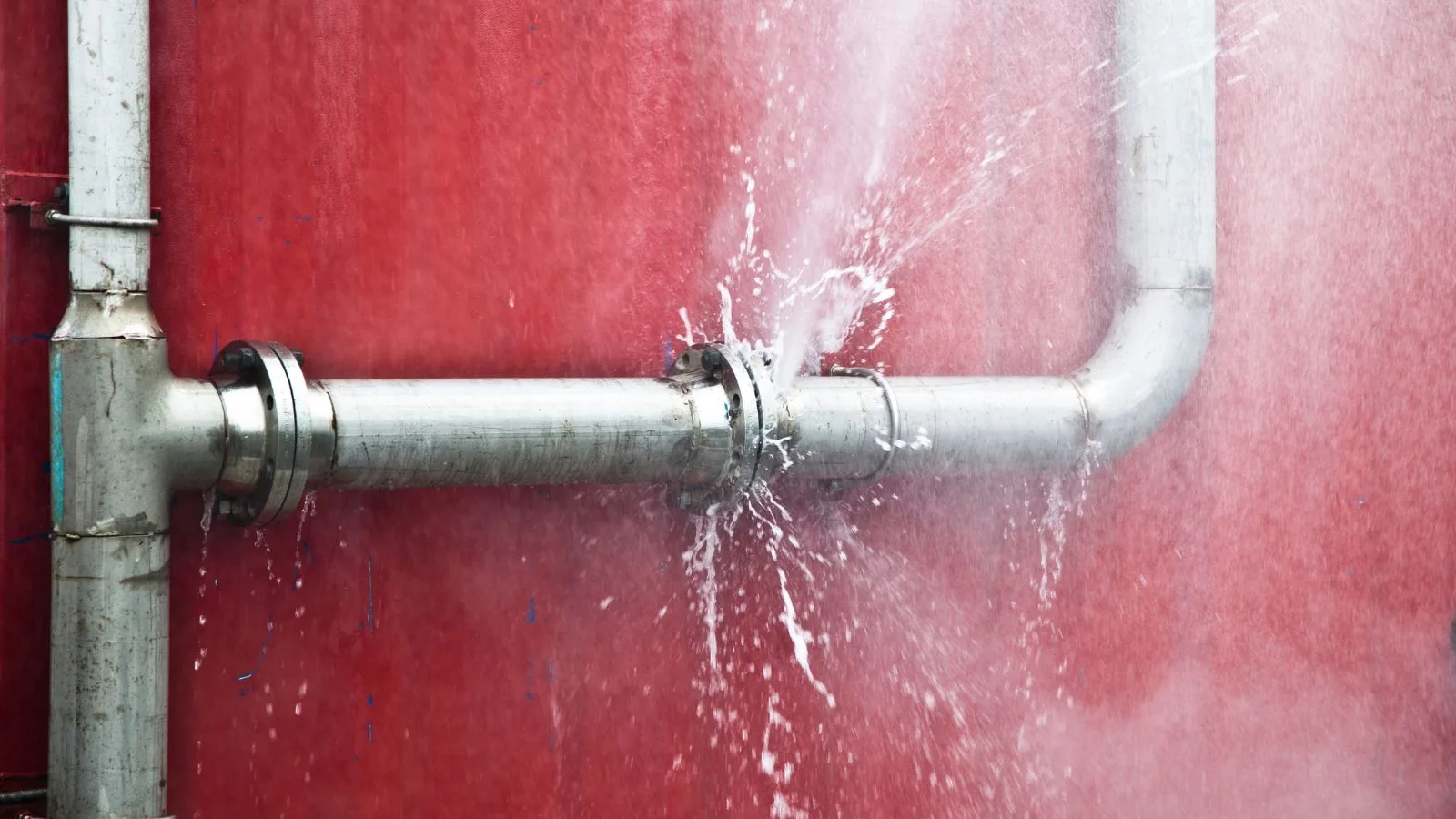
The short answer: sudden and accidental, yes. Slow, flood and sewer, often no.
Most standard homeowners policies cover water damage that is sudden and accidental, such as a pipe that bursts, a water heater that fails or a washer hose that splits. They often do not cover damage that builds slowly from a drip, seepage or poor maintenance.
Flood is usually excluded from a standard policy and covered by a separate flood policy. Sewer and drain backup is often excluded too, unless an endorsement was added. These rules are general, and your policy language controls, so read your declarations page and the water sections.
What a typical policy covers
- Sudden failure of a supply line, drain pipe or fixture inside the home
- Discharge from a water heater, washing machine, dishwasher or other plumbed appliance
- Freezing that splits a pipe, when the home was kept heated or the policy's conditions were met
- Rain that enters through an opening created by a covered storm event, such as wind damage to a roof
- Reasonable emergency steps to protect the property from further damage
What a typical policy excludes
| Cause | Often covered? | Why it matters |
|---|---|---|
| Burst pipe or sudden appliance failure | Usually yes | Sudden and accidental fits the usual wording |
| Slow leak over weeks or months | Often no | Policies commonly exclude continuous or repeated seepage |
| Flood from rising water outside | Not on a standard policy | Requires a separate flood policy |
| Sewer or drain backup | Only with an endorsement | Ask your agent if you have it |
| Groundwater through the foundation | Often no | Treated like flood or seepage |
| Neglect or lack of maintenance | No | Insurers expect reasonable upkeep |
Flood is separate in Rahway, and it is documented
The city's Know Your Flood Hazard material describes flooding along the Rahway River and Robinson's Branch, with Floyd, Irene in 2011 and Sandy among the events. The remnants of Ida in September 2021 led to a FEMA major disaster declaration for the area. If your home is near either channel, ask your agent about flood coverage, because the New Jersey Department of Banking and Insurance explains that flood is typically excluded from a standard homeowners policy and needs separate coverage.
Sewer and drain backup: an add-on to ask about
A backup through a floor drain is one of the most common surprises. Many policies do not cover it unless you added a water backup endorsement. The coverage limit is often lower than the main policy limit, so ask for the number.
If you have a finished basement, the endorsement may be worth the cost. Read the definition of backup carefully, since some policies treat sump pump overflow differently from sewer backup. Our sewage backup cleanup page explains what the cleanup involves.
What to do right after a loss
Stop the water
Close the main or the valve for the fixture. Insurers expect you to limit further damage.
Document before moving anything
Take wide and close photos and a video. Note the time you found the water and the time you shut it off.
Call your insurer
Report the loss and ask about notice rules and emergency service. Write down the claim number and the representative's name.
Start mitigation
Arrange water removal and drying right away. Keep receipts. Delay can reduce the amount an insurer will pay.
Keep damaged parts
Save the failed hose, valve or pipe section, since the adjuster may want to see it.
Records that make a claim smoother
Adjusters look for the cause of loss, the timeline and the scope of damage. Dated photos, a list of damaged items and moisture readings answer those questions. Mitigation records show that you acted quickly.
We keep daily moisture logs, photographs of removed materials and notes on why each step was needed. We do not decide coverage, and we do not tell you what your policy says. We give you the records, and your insurer makes the decision. You can also ask for a copy of the scope for your own file.
How mitigation fits with a claim
Most policies require reasonable steps to prevent further loss. Pumping, removing wet materials and drying are those steps. If you wait for the adjuster before starting, the water can spread and the claim can grow.
That does not mean you should sign anything under pressure. Read any work authorization first, and ask for the scope in writing. For a pipe failure, see burst pipe water damage. For a failed supply line near a floor, water extraction explains the first steps.
Everyday situations and how policies usually treat them
| Situation | Typical treatment | What to do |
|---|---|---|
| Washer hose splits while you are at work | Often covered as sudden discharge | Shut the valve, document, report the loss |
| Rain comes through a roof damaged by wind | Often covered when the storm created the opening | Tarp the roof, photograph, report |
| Sump pump quits during a storm | Depends on the policy and any backup endorsement | Read the water backup section |
| Pipe freezes while the home is vacant | May depend on heat and occupancy conditions | Check policy conditions for vacancy |
| Ceiling stain from a slow roof leak | Often treated as wear and tear | Repair the roof and ask your insurer how it is treated |
Treat the table as a starting point, not an answer. Wording differs between insurers, and endorsements change the result. A phone call to your agent costs nothing, and a written reply is better than a verbal one.
Questions worth asking your agent this week
- What is my deductible for water damage, and is there a different one for wind or hail?
- Do I have a water backup or sump overflow endorsement, and what is the limit?
- How does my policy treat a leak that went unnoticed for some time?
- Does my policy cover the cost to find the source of a leak, such as opening a wall?
- What are the notice requirements after a loss, and who do I call after hours?
Write the answers in a notes file with the date and the name of the person who answered. If you ever need to rely on the answer, that record helps.
When to contact your agent instead of the claims line
If you are unsure whether a loss is worth reporting, call your agent first and ask general questions. Be clear whether you are asking about coverage or reporting a loss, because a report may start a claim file. Ask about your deductible and how a claim could affect renewal.
Homeowners in Woodbridge and Clark ask the same questions, and the answers depend on each policy.
Insurance and water damage questions in Rahway
Usually, when the break was sudden and accidental. Policies differ, so read yours. Coverage often includes damage to floors and walls and the cost of drying, though not always the cost to repair the pipe itself.
Often not. Many policies exclude continuous or repeated seepage over time. If you find a long-running leak, report it quickly and ask your insurer how it will be treated.
It can, depending on the insurer, the claim and your history. Ask your agent before filing a small claim. You still must follow the policy's notice rules after a loss.
If it sits in or near a mapped flood zone along the Rahway River or Robinson's Branch, it is worth asking. Standard policies usually exclude flood. Check the FEMA map and talk to your agent.
Your insurer decides based on your policy. A restoration company supplies records but does not decide coverage.