
The decision comes down to four numbers
Look at your deductible, the cost to dry and repair, how long the leak has been running and whether damage is hiding behind surfaces. If the repair is likely below the deductible, a claim may pay nothing. If hidden damage is likely, the true cost could be much higher than it looks.
Before you decide, learn how far the water went. A stain on a ceiling is not the same as a wet cavity with soaked insulation. Measurements, not guesses, should guide the decision.
| Factor | Points toward filing | Points toward waiting |
|---|---|---|
| Cost versus deductible | Repair clearly exceeds the deductible | Repair is well below the deductible |
| Hidden damage | Readings show wet framing or insulation | Readings show a small, dry area |
| Cause | Sudden pipe or appliance failure | Old, slow seepage that policies may exclude |
| Time | Policy notice rules may apply | No sign of spreading |
| Claims history | Few prior claims | Several recent claims |
Why small leaks hide big costs
Water does not stay where it shows. A drip behind a tub can soak the subfloor and the ceiling below. A slow leak in a wall can wet insulation and the bottom plate for weeks. By the time paint peels, the wet area may be several times larger.
A moisture meter and thermal camera cost the homeowner little and help the decision. If readings show a small, dry area after repair, you may handle it yourself. If readings show a large wet area, you will want to know your insurance options.
A photo in the ceiling is a good start
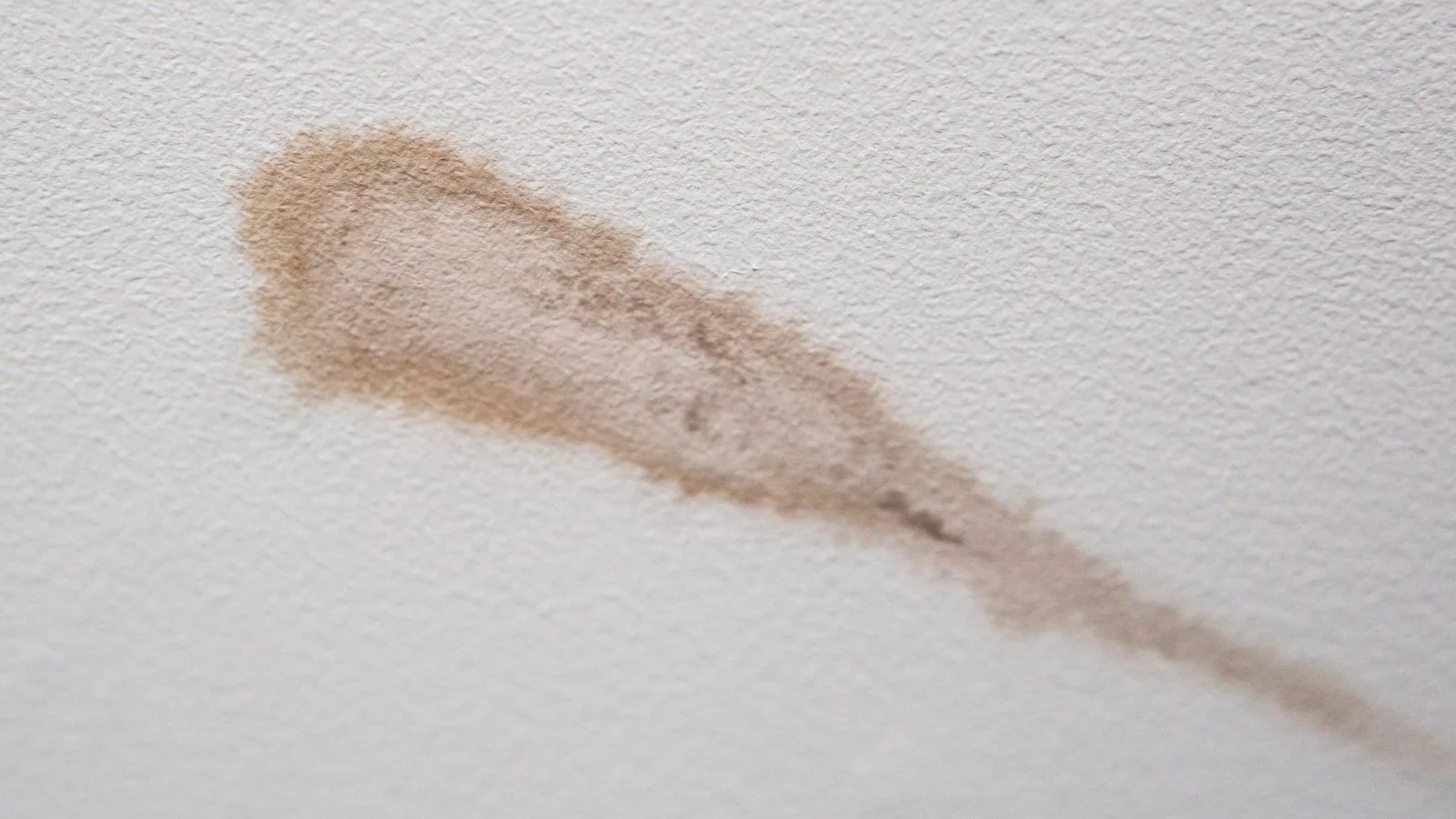
The ceiling in a Rahway rental or two-family home is a common place for a small leak to show up first. If the stain appeared after a neighbor used a bath or washer, tell the landlord or owner and photograph the stain with the date. Even if you decide not to file, those photos protect you if the stain grows or mold appears later.
Notice rules and why to read them
Policies require prompt notice of a loss. Waiting too long can complicate a claim. Reporting a loss does not always mean filing a claim, but it can start a file. Ask your agent how reports and claims differ for your insurer.
Also ask about the deductible and whether a claim can affect renewal. Different insurers handle this differently, and an honest answer lets you choose with open eyes. If you are unsure, take notes of what is said.
What to do while you decide
Stop the leak
Close the valve, fix the fixture or tarp the roof. Do this before anything else.
Photograph and take notes
Record the date, what you saw and what you did.
Get readings
Ask a restoration company for a moisture reading of the area.
Compare costs
Estimate the cost to dry and repair against your deductible.
Call your agent with questions
Ask general questions first, and report the loss if the policy requires it.
When it is usually worth filing
A sudden break that soaks flooring and walls, a leak into a ceiling with insulation damage, or a failed appliance that wets several rooms often exceeds the deductible. Water that traveled between floors or into a finished basement is another clear case.
In those cases, start mitigation right away and keep records. Our water extraction crews start removal and drying, and you can send our logs to the adjuster. For ceiling leaks, ceiling water damage repair explains the steps.
When handling it yourself can make sense
A one-time drip that wet a small area of flooring, found within hours and dried the same day, may not justify a claim. The same goes for a minor leak under a sink that stained the cabinet base. Fix the cause, dry thoroughly and watch the area for a few weeks.
Keep your receipts and photos. If a problem appears later, you will have a record. Homeowners in Clark and Woodbridge ask this question after small appliance leaks.
A simple worksheet to decide
Write your deductible
Find it on the declarations page. Water damage may have its own deductible.
Estimate the repair
Add drying, removal and rebuilding. Use readings, not just what you can see.
Subtract
If the repair exceeds the deductible by a clear margin, a claim may be worthwhile.
Add the unknowns
Hidden damage, mold risk and future repairs can raise the number.
Ask about effects
Ask your agent how a claim or a report could affect renewal.
How to keep a leak from becoming a claim at all
Small habits prevent most claims. Replace old washer hoses, check under sinks twice a year, test the shutoff valves and watch your water bill. A bill that jumps with no change in use points to a leak somewhere.
If you leave home for several days, close the water to the washer and consider closing the main. These steps cost nothing and cut the risk of a large loss. They also look good to an insurer if a claim happens anyway.
Keeping a home maintenance log
A short log of repairs, replacements and inspections helps with claims. Note when you replaced a water heater, a supply line or a roof section. Photograph the work and keep receipts. If an insurer asks about maintenance, you can answer with dates and documents.
A note on honesty with insurers
Always describe a loss accurately. Do not guess at the cause, and do not hide earlier damage. If you are unsure whether a stain is new, say so and share your photos. Insurers investigate, and a clear record from the start is easier to defend than a confused story later.
If your claim is denied or reduced, ask for the reason in writing and read it. You can ask for a review, and a public adjuster or an attorney can advise on larger disputes. For small leaks, a calm conversation and good records resolve most questions.
If you decide not to file, still keep the documents. A folder with photos, receipts and readings protects you if the problem returns or if you sell the house. Written proof of a quick, careful repair is valuable.
What a restoration company can and cannot say
We can tell you how wet a material is, how far water traveled and what drying involves. We cannot tell you what your policy covers or how the insurer will treat the loss. Use our readings and your policy together, and ask your agent for coverage answers.
Where to check claim rules
For questions about how claims are handled in New Jersey, the state Department of Banking and Insurance is the public body to contact. Drying work is judged against the ANSI/IICRC S500 water damage standard, and a record of readings supports a claim.
Small leak claim questions in Rahway
Often not, because the claim may pay nothing. But hidden damage can change the total, so get readings first.
Yes, if materials stay damp for days. Dry quickly and check for hidden wetness.
That depends on the insurer. Ask your agent how reports and claims are handled before you call.
Tell the landlord in writing and photograph the damage. Your renters policy covers your belongings, and the landlord's policy covers the building.
No. Your insurer decides. We provide moisture readings and photos to support your decision and any claim.