
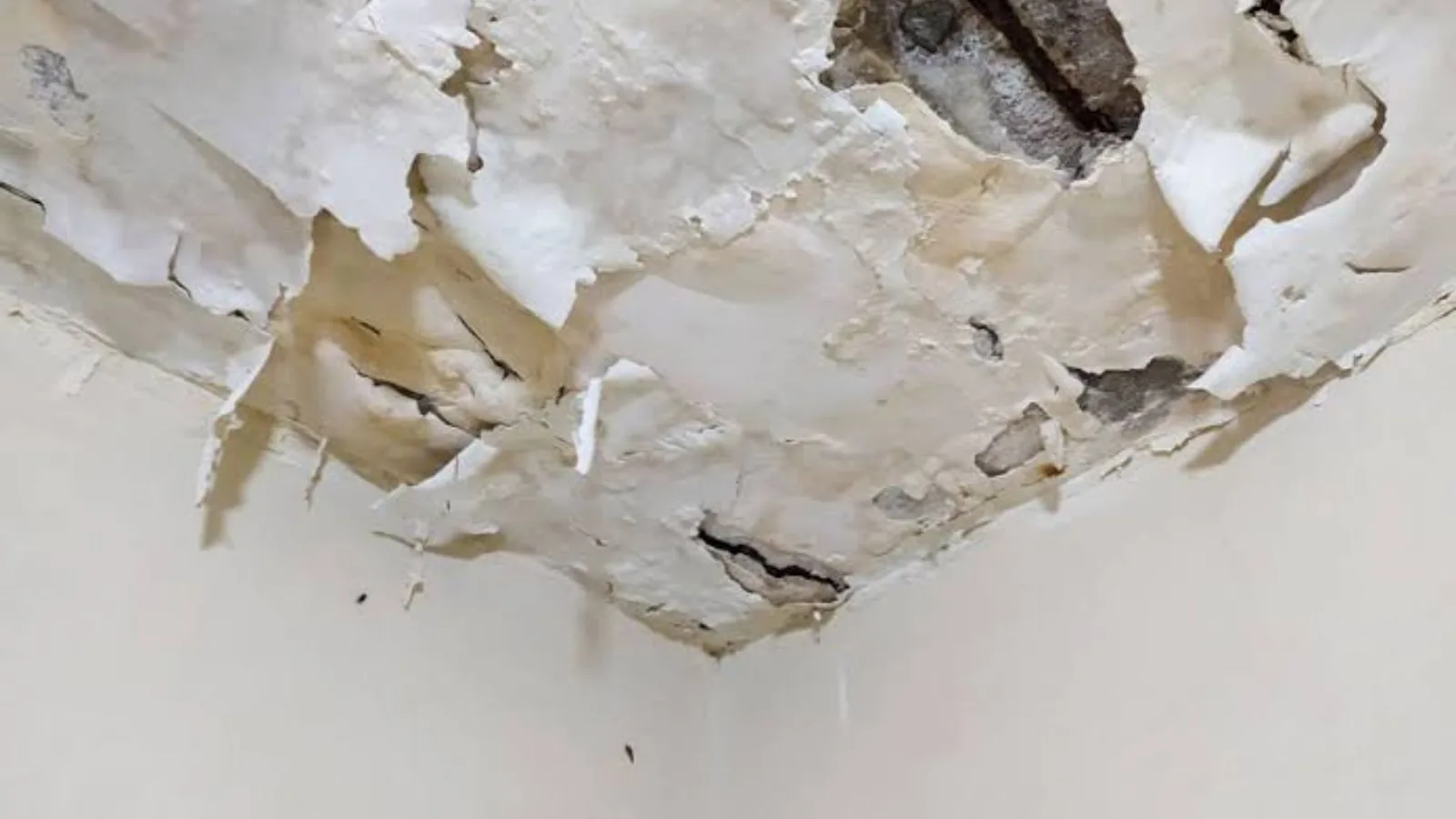
Why the difference matters
Repairs, safety and insurance all depend on whether water damage is recent or long-standing. A sudden pipe failure last week calls for emergency drying. A ring stain from a roof leak fixed years ago may only need paint. Mold, rot and structural weakness point to a long-term problem.
Insurers also treat the two cases differently. Many policies cover sudden and accidental damage and exclude gradual seepage. That makes honest dating of the damage important, and it is best done with evidence, not guesses.
Signs of recent water damage
- Surfaces feel damp, cool or soft to the touch
- Fresh stains with soft, dark edges that grow over hours or days
- Paint or wallpaper bubbling, with no peeling or flaking yet
- A smell of wet cardboard or dampness rather than deep must
- Dripping, pooling or active running water
- Moisture meter readings that are well above nearby dry areas
Signs of old or long-term damage
| Sign | What it suggests | How to confirm |
|---|---|---|
| Brown rings with layered edges | Repeated wetting over time | Compare with a dry reading and look for the source |
| Rust on nails, screws or pipes | Long exposure to moisture | Check fasteners and metal near the stain |
| Crumbling, powdery or brittle drywall | Long-term dampness or deterioration | Press gently with a tool in a hidden spot |
| White crust on masonry | Water carrying minerals through the wall | Look for efflorescence on block or brick |
| Soft, dark or stringy wood | Decay from ongoing moisture | Probe with a screwdriver |
| Mold growth | Moisture for days or longer | Inspection and moisture readings |
Rahway's older homes keep their history
The ACS puts the median build year for Rahway housing at 1961, and many homes have decades of repairs, patched ceilings and layers of paint. An old stain can sit under new paint and mislead a buyer or a new owner. If you are buying or renting an older Rahway home, ask for a moisture reading on any stained ceiling or lower wall, and ask what repairs were done and when.
A dry stain is not always an old stain
A leak that stops can leave a dry stain within days. A stain that looks old may come from a pipe that leaked briefly last month. On the other hand, a stain that feels dry may be a sign of a leak that comes and goes with weather or use.
Check the same spot after rain and after the shower or washer runs. If it darkens or grows, the source is active. If it stays the same, take a reading and keep photos. A thermal camera can show cool damp patches that the eye cannot.
How to investigate step by step
Photograph and date the stain
Place a coin or ruler beside it for scale.
Feel and probe gently
Press on drywall in a hidden spot. Soft or crumbling material suggests long exposure.
Take a moisture reading
A meter shows whether the material is wet now.
Look for the source
Check the roof, plumbing, windows, appliances and drains above and around.
Repeat after a few days
Compare the photos and the readings.
Why old damage can still need attention
Old stains may mean a past leak that was repaired, but they can also mean a slow leak that never stopped. Rot in framing, rusted fasteners and mold in a cavity can follow. If you find any of those signs, plan a closer look.
Our wall and drywall water damage repair page describes how we open and dry a wet wall, and ceiling water damage repair covers stained ceilings. If you suspect a leak behind a finished surface, a reading often saves a lot of guesswork.
What this means for a claim
Insurers ask when the damage began and what caused it. Honest answers with photos and readings are best. If you discover long-term seepage, report it promptly and describe what you found. Do not paint over the stain or remove evidence before an adjuster sees it, unless safety requires it.
A restoration company can describe what the materials show, but it cannot determine coverage. Your insurer decides. Our logs and photos show what we found and why we took each step.
For buyers, sellers and landlords
Buyers should ask about past water events and check basements, ceilings and under sinks. Sellers should be ready to explain repairs and show documents. Landlords should respond to stains quickly, because tenants may report a small stain that points to a larger problem.
Homeowners in Clark and Roselle Park often find old stains while renovating. A moisture check before the new wall goes up costs little and avoids trapping an old leak behind new drywall.
Photo tracking over time
A series of dated photos with the same angle and a reference object is the cheapest tool you have. Take one when you first see a stain, one after a rain or heavy fixture use, and one a week later. Growth, new rings or darker color show activity.
Store photos in a folder with the date in the file name. If the stain does not change over weeks and readings are normal, it is likely dormant. If it changes, you have evidence of an active leak and a record to show an insurer or a contractor.
What a moisture reading can and cannot show
A meter shows whether a material is wet now. It does not show when the leak began. A dry reading on an old stain suggests the leak stopped or is intermittent. A wet reading suggests an active source. Combine the reading with the history of the house and the weather to make a good decision.
When to call a professional
Call if the material is wet, if the stain is spreading, if there is mold or a persistent odor, or if you cannot find the source. A professional can trace water with meters and cameras and tell you what is active and what is not. A short visit is cheaper than a second repair.
If you find structural rot, a carpenter or engineer should evaluate it. We handle water removal and drying and can coordinate with other trades.
Reference for assessing damage age
Judging whether damage is recent or long-standing is a measurement question. The ANSI/IICRC S500 water damage standard is the reference for how moisture is read and how categories are assigned, and an assessment on site beats any photo.
Old and new damage questions in Rahway
Not reliably. Color depends on the material and what the water carried. Rings and rust suggest repeated wetting, but a reading and source tracing are better evidence.
Not always. Some leaks come and go with weather or use. Check the stain after rain and after fixtures run.
Only after you confirm it is dry and the source is fixed. Painting over a wet area hides the problem and can trap moisture.
A careful inspector will look for stains, rust and soft materials, and may use a moisture meter. Ask for readings, not just a visual check.
It can. Many policies exclude long-term seepage, so describe what you found honestly and keep your photos.