
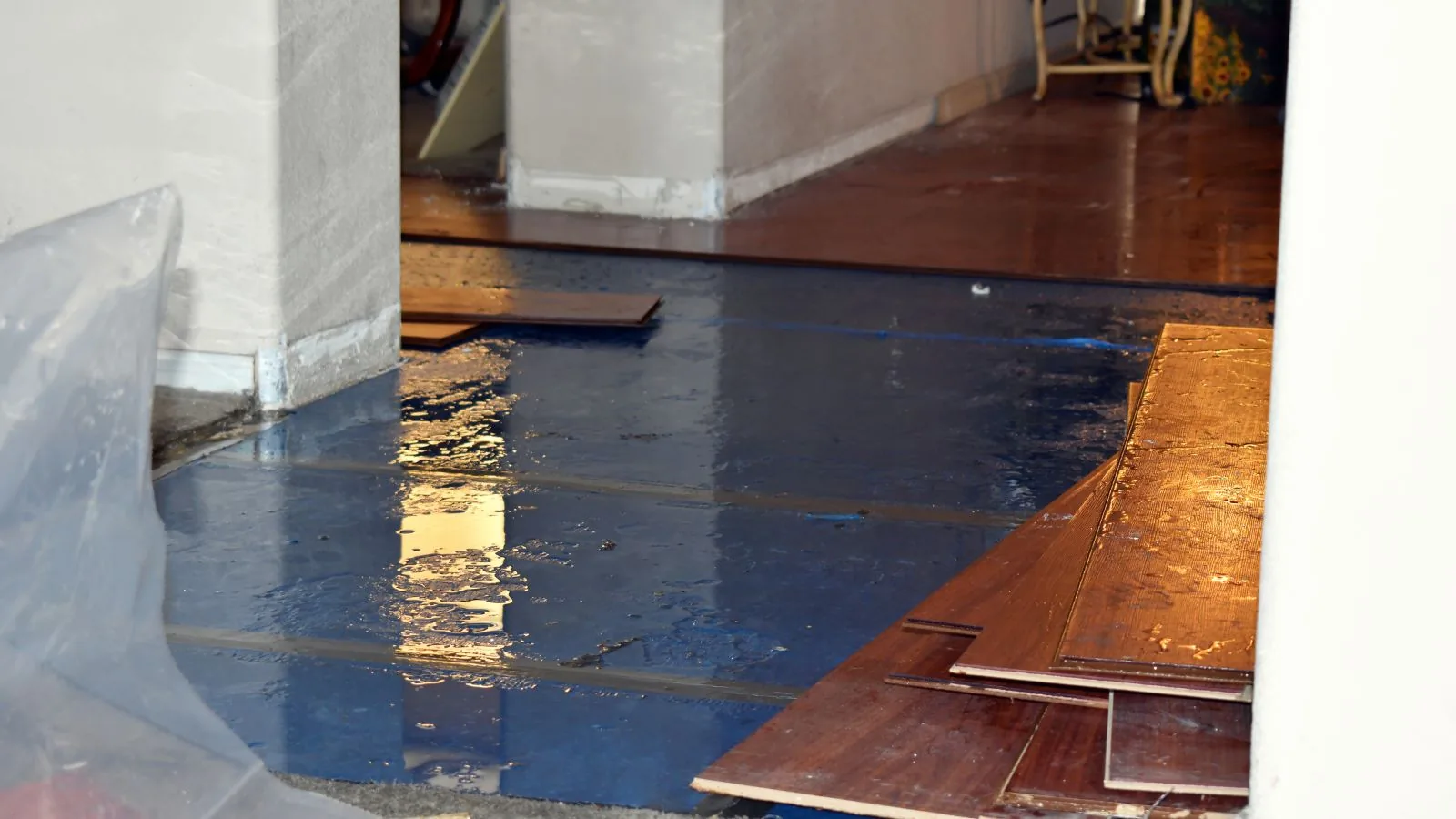
Why categories exist
The ANSI/IICRC S500 standard for professional water damage restoration sorts water by how contaminated it is. The idea is simple. Clean water is handled one way, dirty water another. The category tells the crew what safety gear to wear, what materials can be dried and what cleaning is needed.
Water can also change category over time. Clean water that sits for days can pick up bacteria from the materials it touches. That is another reason to act quickly.
| Category | Source | Examples | General approach |
|---|---|---|---|
| 1 | Clean water source | Broken supply line, overflowing sink with clean water | Extract and dry, many materials can stay |
| 2 | Significant contamination | Washer or dishwasher discharge, toilet overflow with urine only | Extract, clean and dry, porous materials may go |
| 3 | Grossly contaminated | Sewage, river or storm flood water | Protective gear, remove porous materials, sanitize |
Category 1: clean water
Water from a pipe, a faucet or a water heater is clean when it first spills. If it is caught quickly, carpet, drywall and wood can often be dried in place. The risk grows with time, because standing water gets dirty.
A Category 1 loss is usually the simplest, but it can still be large. A burst pipe running overnight can flood several rooms. Quick extraction and drying keep the loss at Category 1.
Category 2: gray water
Gray water has some contamination. It might come from a washing machine, a dishwasher or an overflowing aquarium. It can cause discomfort if people contact it, and it can become Category 3 if left standing.
Carpet and pad that got gray water are often removed, while hard surfaces can be cleaned and dried. Drywall may be dried or cut out, depending on how long it was wet. We check readings and explain which option applies.
Category 3: black water
Sewage, river water, storm surge and water from outside the building are Category 3. They carry bacteria and other contaminants. Anything porous that touches them, such as carpet, padding, insulation and low drywall, is normally removed and discarded.
Workers wear protective gear, and the area is cleaned and treated before drying. Residents should stay out. Our sewage backup cleanup and flood damage restoration pages describe those jobs.
Rahway's flood record and what it means for categories
The city's Know Your Flood Hazard guidance names the Rahway River and Robinson's Branch as sources of past flooding, with Floyd, Irene in 2011 and Sandy among the events. Water that comes from those channels is Category 3 when it enters a home. If your street is near either, expect porous materials to come out after a flood, and plan for that in your insurance and your budget.
Classes 1 to 4: how much and how fast
| Class | Meaning | Typical example |
|---|---|---|
| 1 | Least water, low evaporation load | Small area, low-porosity materials |
| 2 | Larger area, carpet and cushion wet, walls wet up to about two feet | Bedroom or bathroom flood |
| 3 | Fastest evaporation load, water from above | Ceilings, walls, insulation and carpet soaked |
| 4 | Specialty drying, low-porosity materials hold water deep | Hardwood, plaster, concrete, brick |
Class tells us what equipment and time to expect. A Class 4 job takes more specialized equipment, such as injection drying or desiccant dehumidifiers, and more days. A Class 1 job may be done quickly.
How category changes your decisions
Find the source
Where did the water come from, and what did it touch?
Check the time
Water left standing for more than a day or two can worsen by a category.
Decide what to remove
Porous materials with Category 2 or 3 contact are usually removed.
Choose protective steps
Gloves, boots and containment protect people and neighbors.
Document
Photographs and notes support any insurance claim.
What you can do at home
If you are unsure about the source, assume the worse category and keep people and pets out. Do not use a household vacuum on water. Wear gloves and boots if you have to walk through. Call for help rather than guessing.
For standing water, water extraction is the first step. For drying after cleanup, structural drying explains the process. Homeowners in Woodbridge and Sewaren deal with Category 3 water most often after tidal storms.
How categories change during a loss
Water can start in one category and move to another. Clean supply water that spreads across a dusty floor, soaks carpet and sits for two days is no longer as clean as it started. Water that stays warm and stagnant can grow bacteria fast.
That is why crews record when the loss began, what it touched and when it was extracted. Those facts help decide whether materials such as carpet or drywall can be dried or should be removed.
Safety steps by category
| Category | What you should do | What to avoid |
|---|---|---|
| 1 | Stop the source, protect belongings, call for extraction | Waiting days before drying |
| 2 | Wear gloves, keep children and pets away, call for help | Using household vacuums on wet areas |
| 3 | Leave the area, do not touch the water, call right away | Cleaning it yourself or running fans through the house |
Anyone with open cuts, a weakened immune system or breathing concerns should not enter a Category 2 or 3 area. Ask a doctor if you have questions about your own situation.
Records that help later
Photograph the water and its source, note the time and keep any failed part. Record what the water touched. If the category changes, note when you noticed. These simple records help the crew choose steps and help an insurer understand the loss.
Common questions about overflows and appliances
A toilet overflow from the bowl is usually Category 2, while an overflow from the sewer line is Category 3. A dishwasher discharge is generally Category 2. A refrigerator icemaker line leak is Category 1 at first. A sump pump overflow depends on what the pit has been receiving, so treat it with caution.
If you cannot tell, treat the water as the dirtier category and call for advice. The cost of caution is small compared with a health problem or a second cleanup.
If you rent, tell your landlord the category you believe applies and the source. That helps them decide how to respond and whom to call. Keep your own notes and photos in case there is a later question.
Does category affect insurance?
It can. Policies may treat clean-water leaks, appliance discharge, sewer backup and flood differently. Your insurer decides coverage, not a restoration company. We describe the category we found and why, and we keep photos and logs. That information helps an adjuster understand the scope.
Category and class questions in Rahway
Usually Category 1 at first, since it comes from a clean supply. It can worsen if it sits for days or crosses dirty surfaces.
Not once it has entered a building through a roof or wall. Storm water often picks up contaminants and can be Category 2 or 3.
Categories 2 and 3 can carry contaminants. Gear protects the crew and prevents spreading material through the house.
A loss where low-porosity materials such as hardwood, plaster or concrete hold water deep. They need specialty drying and more time.
If it came from outside, groundwater or a river, treat it as Category 3. A clean pipe leak in a basement is different. The source decides the category.